

admin
Administrators
-
Joined
-
Last visited
Everything posted by admin
-
 Hypospadias management mind map HQ PDF
 -
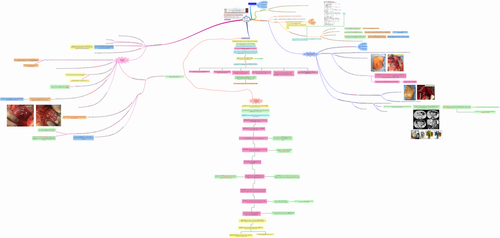 Error traps and culture of safety in pediatric surgical oncology HQ PDF
 -
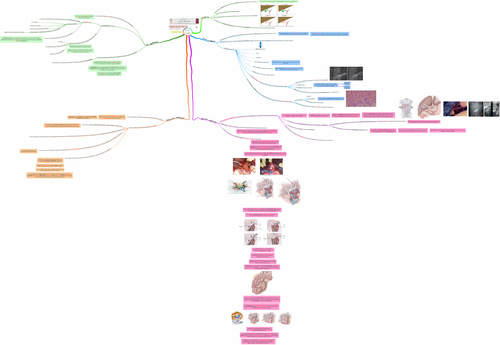 Error traps and culture of safety in biliary atresia HQ PDF
 -
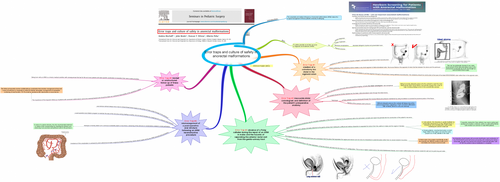 Error traps and culture of safety in anorectal malformations HQ PDF
 -
-
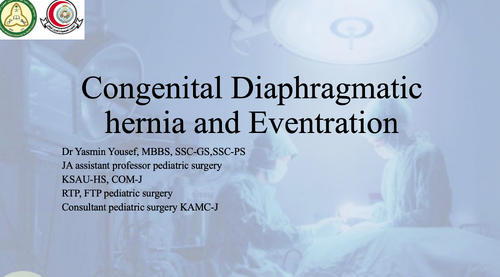 Congenital Diaphragmatic hernia and Eventration lecture
 -
-
-
-
quote from "Pediatric Surgery (Springer Surgery Atlas)" by Prem Puri, Michael E. Höllwarth - "there is no contraindication for any conservative trial of reduction with respect to duration of intussusception or position of the apex, but nonsurgical treatment must not be undertaken in a patient with clinical signs of shock, peritonitis, or severe obstruction."
-
-
quote from "Pediatric Surgery (Springer Surgery Atlas)" by Prem Puri, Michael E. Höllwarth - "Constipation is a common sequela seen after the repair of an anorectal malformation. Interestingly, patients with lower defects, and therefore with better prognosis for bowel control, suffer a higher incidence of constipation and vice versa. Constipation correlates directly with the degree of rectosigmoid dilation at the time of colostomy closure. Therefore, every effort should be made to try to keep the rectosigmoid empty and decompressed from day 1 in these patients."
-
quotes from "Pediatric Surgery (Springer Surgery Atlas)" by Prem Puri, Michael E. Höllwarth - "The repair of cloacas with longer common channels (>3 cm) represents a real technical challenge and requires a great deal of experience in the management of these cases. For that kind of patient, the pediatric surgeon and/or pediatric urologist should have experience in the management of the urinary structures, including bladder reconstructions, bladder neck reconstructions, ureteral reimplantations, bladder augmentation, and Mitrofanoff procedures, as well as vaginal replacements using rectum, colon, or small bowel." "If the common channel is longer than 5 cm, we recommend opening the abdomen directly in the midline, because the rectum and vagina are not accessible posterior sagittally and are more easily accessed through the abdomen. If the common channel is between 3 and 5 cm, the surgeon can open posterior sagittally, find the vagina or vaginas, and can try to repair them by performing the total urogenital mobilization. If the total urogenital mobilization proves not to be enough to repair the malformation, then the operation must be completed through a laparotomy."
-
quote from "Pediatric Surgery (Springer Surgery Atlas)" by Prem Puri, Michael E. Höllwarth - "When a baby is born with cloaca, the surgeon must keep in mind that approximately 50% of these patients suffer from a very giant vagina full of fluid (“hydrocolpos”). The hydrocolpos may compress the trigone, interfering with the drainage of the ureters and therefore provoke bilateral megaureters and hydronephrosis. All babies with a cloaca should have a complete urologic evaluation at birth, including an ultrasound of the kidneys and ultrasound of the pelvis. The baby should not be taken to the operating room without this evaluation. If the baby suffers from hydrocolpos, it is mandatory that the surgeon drain the hydrocolpos at the same time that he or she opens a colostomy. Not draining a hydrocolpos may produce persistent hydronephrosis and induce an inexperienced pediatric urologist to perform ureterostomies or nephrostomies when they are not indicated. The drainage of the vagina usually takes care of the problem of hydronephrosis. Failure to drain a tense hydrocolpos also may produce infection of the vagina (pyocolpos), perforation, and sepsis."
-
In post op management of vestibular anus quote from "Pediatric Surgery (Springer Surgery Atlas)" by Prem Puri, Michael E. Höllwarth - "When the patient is a newborn, we keep the baby 5–7 days with nothing by mouth postoperatively, giving intravenous antibiotics for 24 h. Occasionally, we see patients that come later in life without a colostomy; in those cases, we clean the bowel meticulously the day before surgery with a balanced electrolyte solution and keep the patient 7 days with nothing by mouth, receiving concentrated glucose solution. Following this routine, we reduce the incidence of perianal dehiscence."
-
quote from "Pediatric Surgery (Springer Surgery Atlas)" by Prem Puri, Michael E. Höllwarth - "When a baby is born with this malformation at our institution, we repair this malformation during the newborn period if the baby is otherwise healthy. If the baby is premature or has associated defects, it is always safer to open a protective colostomy or dilate the fistula until definitive repair can be performed. The surgeon must keep in mind that dehiscence and infection in patients with anorectal malformations not only represent a few more days in the hospital and an ugly scar but also represent the possibility of worsening the prognosis for bowel control."
-
quote from "Pediatric Surgery (Springer Surgery Atlas)" by Prem Puri, Michael E. Höllwarth - "Constipation is a constant sequela and should be treated aggressively. (This is true also for male patients with perineal fistulas.) We have learned that the lower the defect, the greater the chance of constipation. We have also learned that constipation is a self-perpetuating and self-aggravating condition that eventually produces severe megacolon, chronic faecal impaction, and overflow pseudo-incontinence; it must be vigilantly avoided."
-
-
Quote from "Pediatric Surgery (Springer Surgery Atlas)" by Prem Puri, Michael E. Höllwarth - "If the surgeon does not have a clear and reliable image that shows the rectum located below the coccyx, he or she should never approach a patient posterior sagittally without a colostomy and without a distal colostogram. The distal colostogram, which is by far the most valuable study in defining the anorectal anatomy, can be done in patients with anorectal malformations only when the patient already has a colostomy. We have seen catastrophic complications during the performance of posterior sagittal operations in male patients who did not have a distal colostogram." quote from "Pediatric Surgery (Springer Surgery Atlas)" by Prem Puri, Michael E. Höllwarth - "When the surgeon is dealing with a rectourethral bulbar fistula, he or she can expect to see a bulging rectum as soon as the levator muscle is split. In cases of rectoprostatic fistula, the rectum is much smaller and it may not bulge through the incision; the surgeon expects to find it immediately below the coccyx. The surgeon should not look for the rectum in the lower part of the incision in patients with rectoprostatic fistula. Looking for a rectum without preoperative evidence that the rectum is there is the main source of complications in this approach. The surgeon will instead find the urethra, vas deferens, prostate, or seminal vesicles and can damage the nerves important for urinary control and sexual potency." quote from "Pediatric Surgery (Springer Surgery Atlas)" by Prem Puri, Michael E. Höllwarth - "The posterior rectal wall is easily identified by its characteristic whitish appearance. The surgeon must keep in mind that there is a fascia covering the rectum posterior and laterally, which must be removed. The dissection of the rectum must be performed as close as possible to the rectal wall without injuring the rectal wall itself."
-
quote from "Pediatric Surgery (Springer Surgery Atlas)" by Prem Puri, Michael E. Höllwarth - "We prefer to operate on these babies to give the child an anal opening that is centered in the sphincter and appropriately sized, and to achieve a better cosmetic effect."
-
.thumb.jpeg.247495086087f7343f9352332cfbf7da.jpeg.bb6d8af4cef7030492e0408c1cb1008d.jpeg)
 Post Pull-through Obstructive Symptoms lecture






.jpeg.6540065776f7cb2e396f7b0475c0f22c.jpeg)