

Skip to content
View in the app

A better way to browse. Learn more.

Pediatric Surgery Club

A full-screen app on your home screen with push notifications, badges and more.

To install this app on iOS and iPadOS
  1. Tap the Share icon in Safari
  2. Scroll the menu and tap Add to Home Screen.
  3. Tap Add in the top-right corner.
To install this app on Android
  1. Tap the 3-dot menu (⋮) in the top-right corner of the browser.
  2. Tap Add to Home screen or Install app.
  3. Confirm by tapping Install.
Get your Pro Membership!

admin

Administrators
  • Joined

  • Last visited

Everything posted by admin

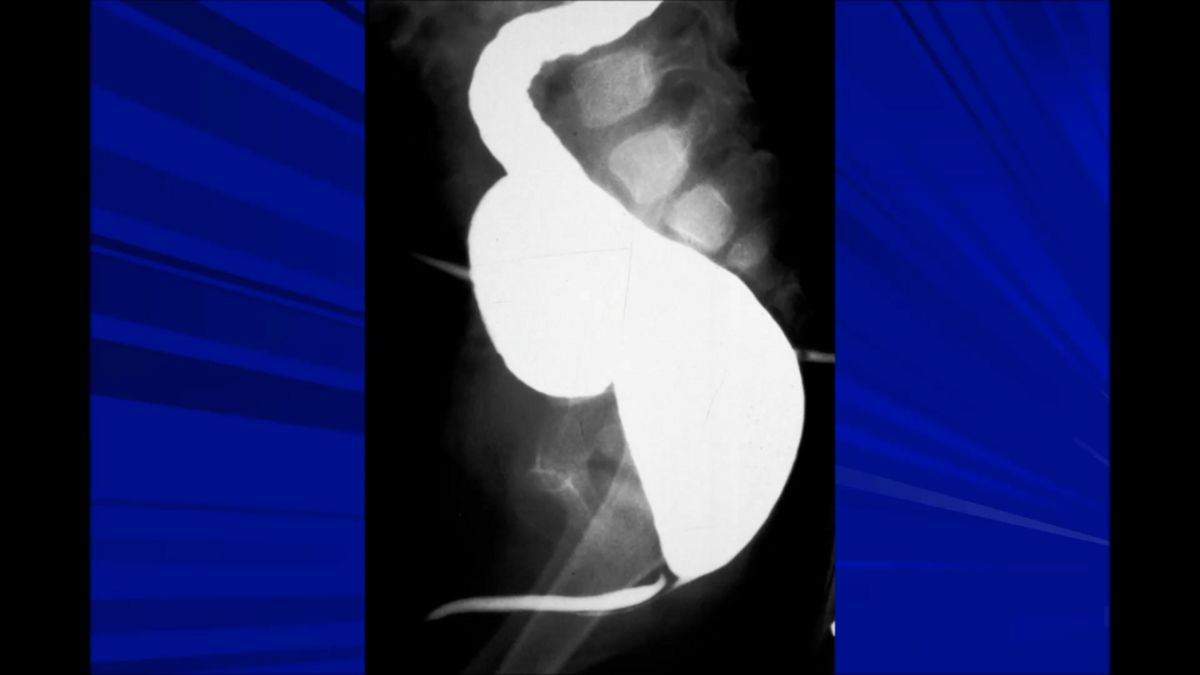
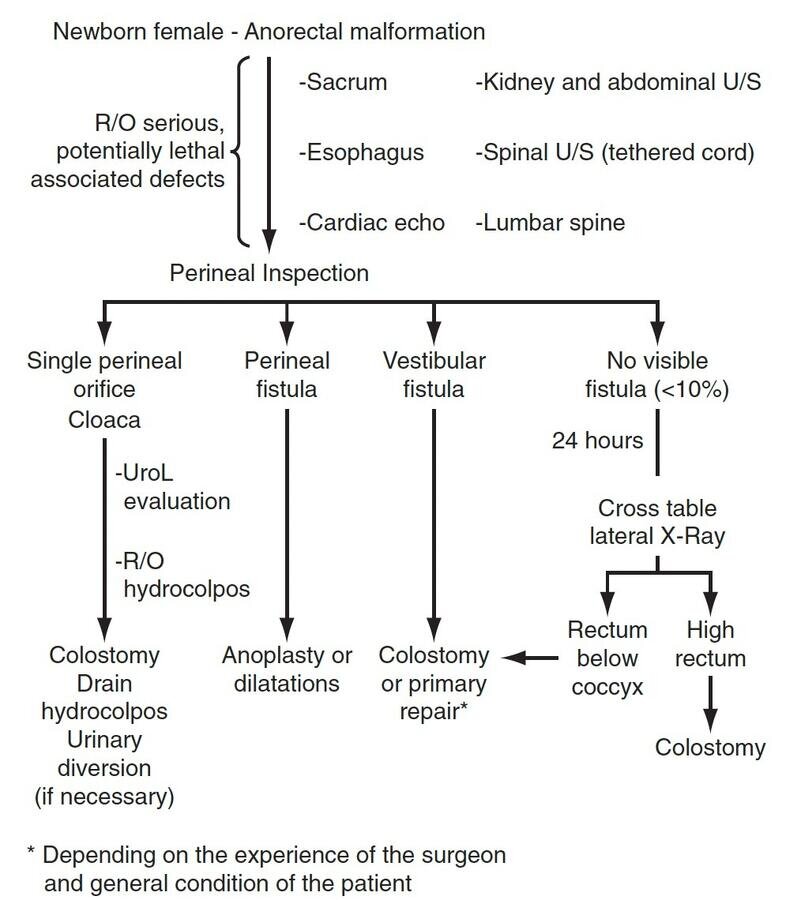
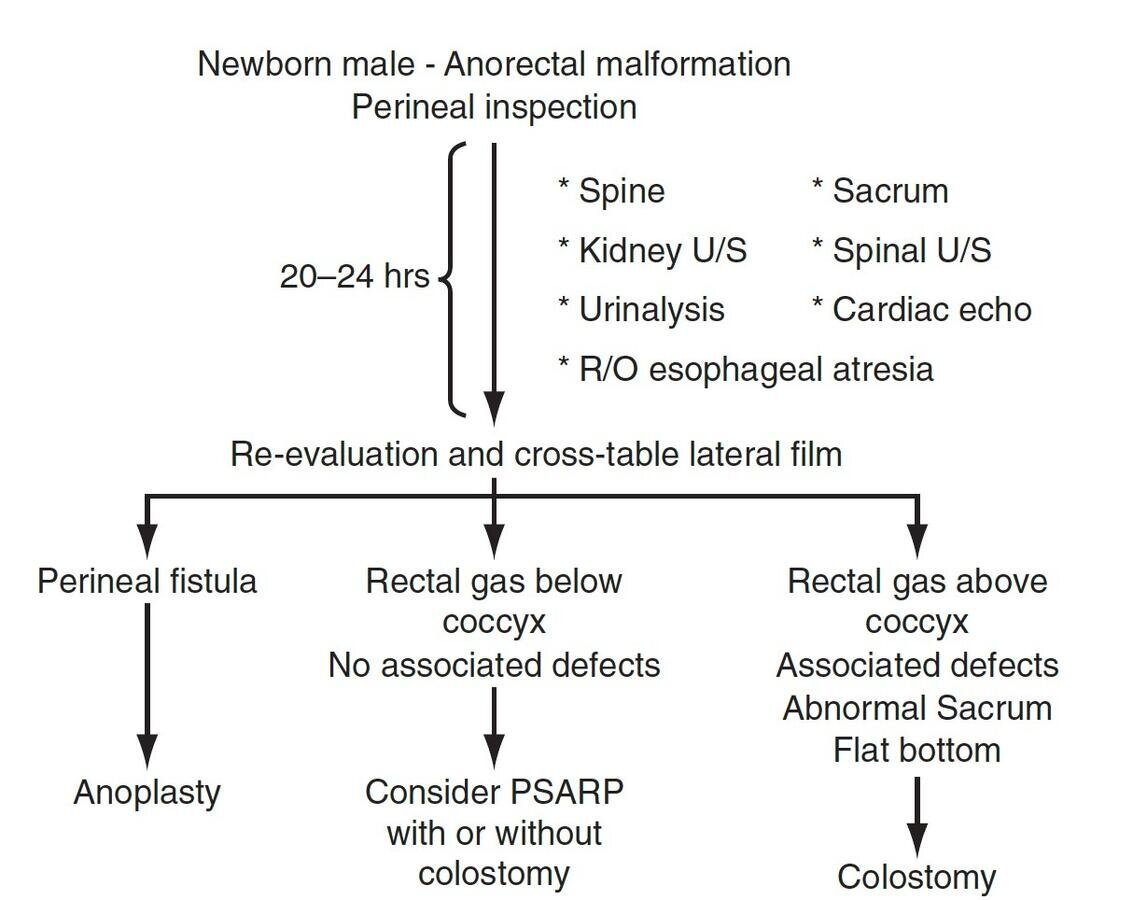
  1. Quote from "ESPES Manual of Pediatric Minimally Invasive Surgery" by Ciro Esposito, François Becmeur, Henri Steyaert, Philipp Szavay - "A useful rule to assist the surgeon on whether or not a laparoscopic approach can be taken is to draw a line from the tip of the coccyx to the very next structure one would find via a posterior sagittal approach. If the structure which the line touches on the contrast enema is the rectum, then the rectum is reachable from below. If that structure which the line touches is the bladder, urethra, or vagina, then laparoscopy will be needed in order to dissect the rectum intra-abdominally (Fig. 43.1a, b)." Quote from "ESPES Manual of Pediatric Minimally Invasive Surgery" by Ciro Esposito, François Becmeur, Henri Steyaert, Philipp Szavay - "Careful selection of the approach on anorectal malformations reconstruction cannot be stressed enough. A purely posterior sagittal approach only in those patients with high rectum can pose dangerous. First, the dissection travels deep into the pelvis often requiring a coccygectomy in order to reach the peritoneal reflection. Second, if the rectum in high, the bladder can be easily confused with the rectum and leading to misidentification and injury to the urinary tract."
  2. Contraction direction of anal continence muscles red line: levator ani blue line: muscle complex green line: para sagital fibers
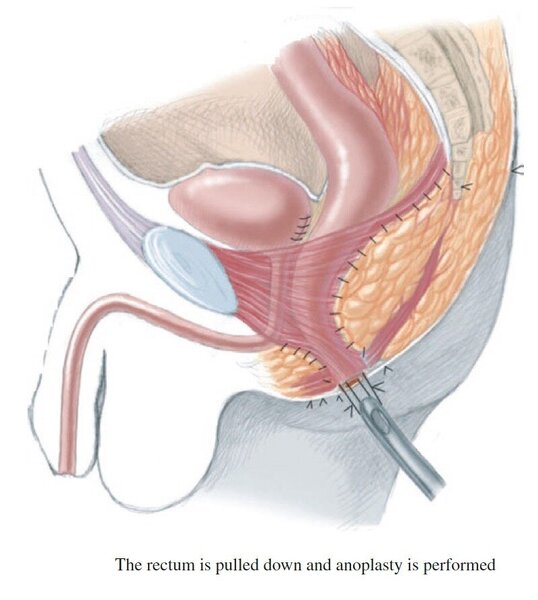
  3. Quote from "ESPES Manual of Pediatric Minimally Invasive Surgery" by Ciro Esposito, François Becmeur, Henri Steyaert, Philipp Szavay - "Numerous technical tricks have been advocated to reduce RP after laparoscopic-assisted anorectal pull-through (LAARP): colic washout of the distal loop to evacuate meconium and have less distension of the rectum during dissection to reduce the risk of redundancy during dissection [5], limited dissection of the rectosigmoid to have a precise length enough to be brought down without excessive redundancy [5], limited peritoneal pression for laparoscopic exposure after recto-perineal anastomosis to limit tension on the descended colon and application of an anchoring stitch with one absorbable suture to track the rectum to the presacral periosteum after recto-perineal anastomosis [5]. This last trick highlighted by Leung et al. [5] managed to significantly reduce the occurrence of RP and reduce soiling in a large series of LAARP."
    • 5 downloads
    • Version 1.0.0
    Currarino syndrome mind map

Account

Navigation

Search

Search

Configure browser push notifications

Chrome (Android)
  1. Tap the lock icon next to the address bar.
  2. Tap Permissions → Notifications.
  3. Adjust your preference.
Chrome (Desktop)
  1. Click the padlock icon in the address bar.
  2. Select Site settings.
  3. Find Notifications and adjust your preference.