


admin
Administrators
-
Joined
-
Last visited
Everything posted by admin
-
-
-
-
-
-
-
-
-
-
-
-
video 1
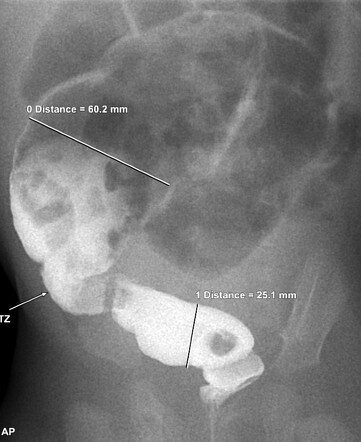
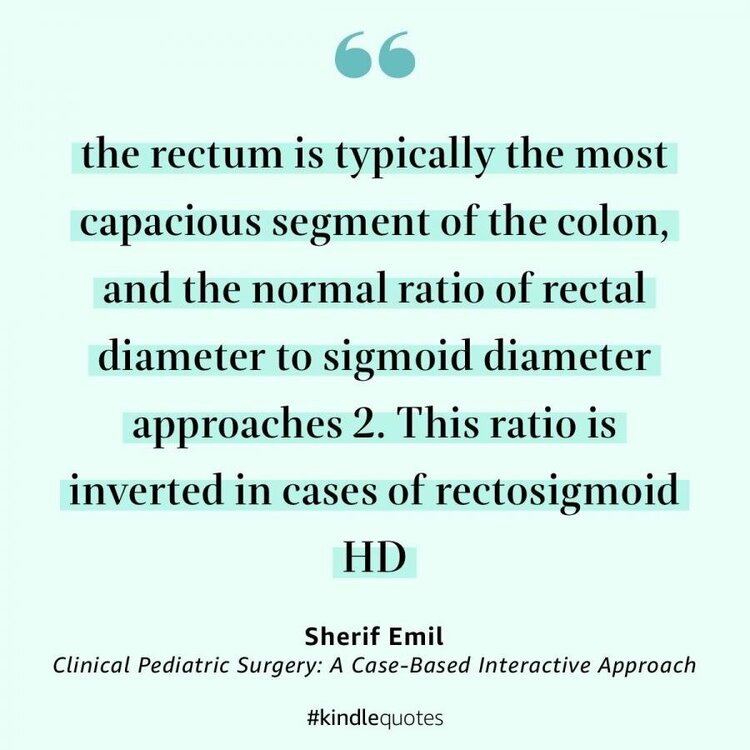
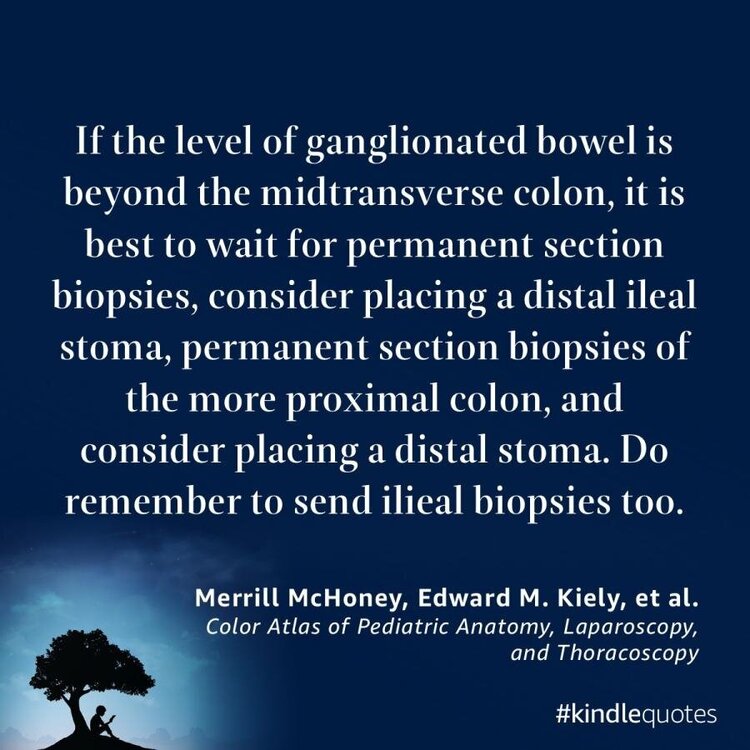
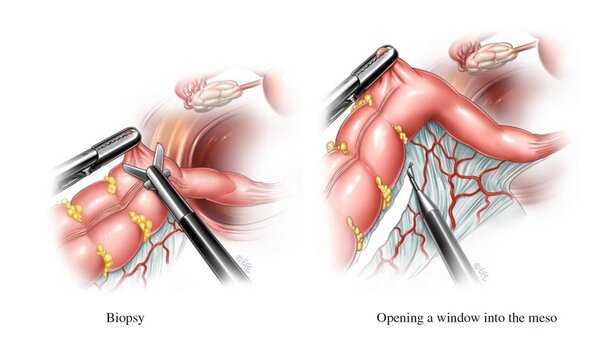
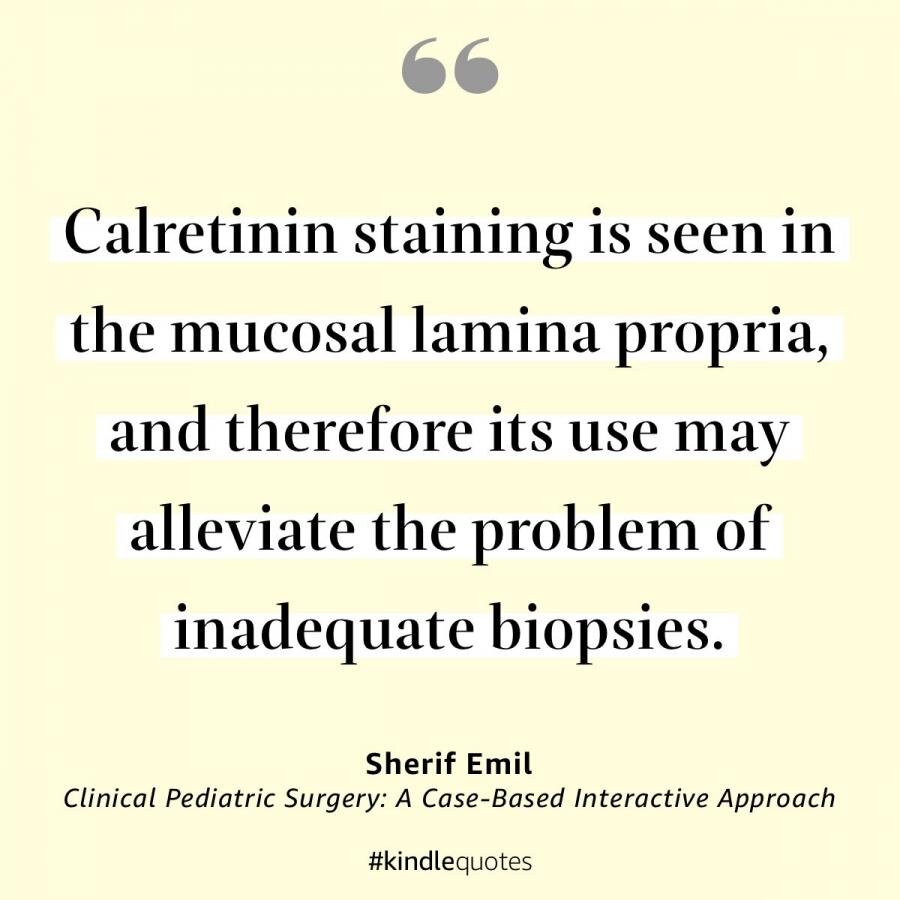
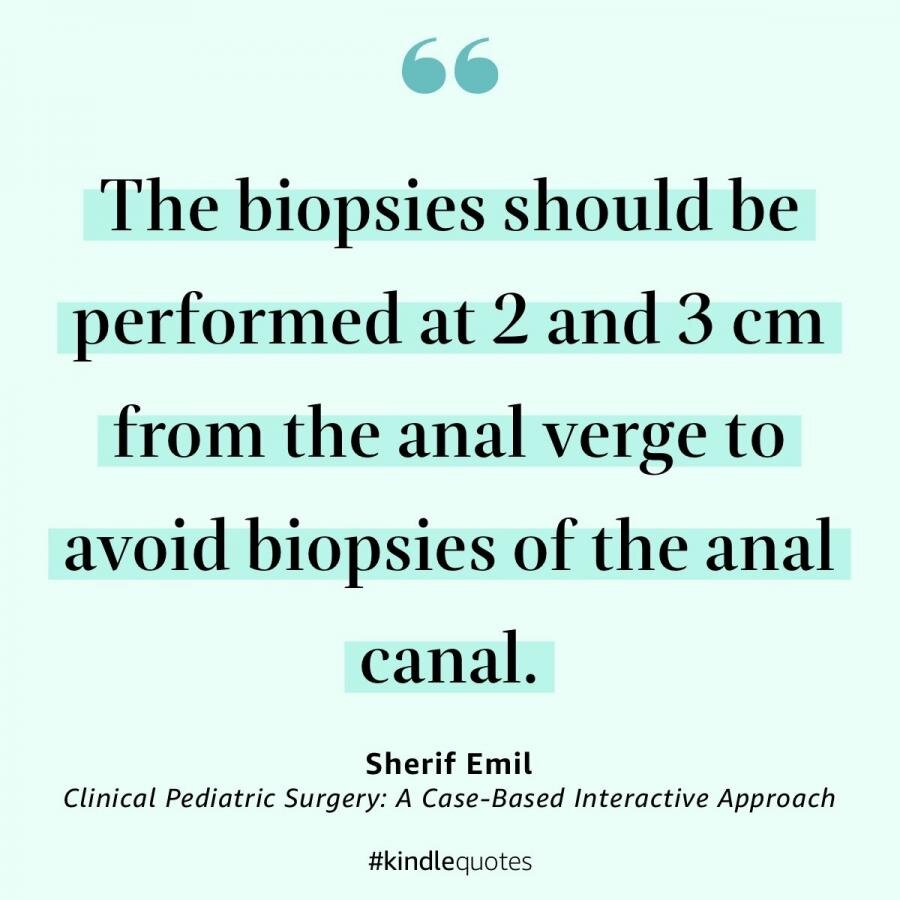
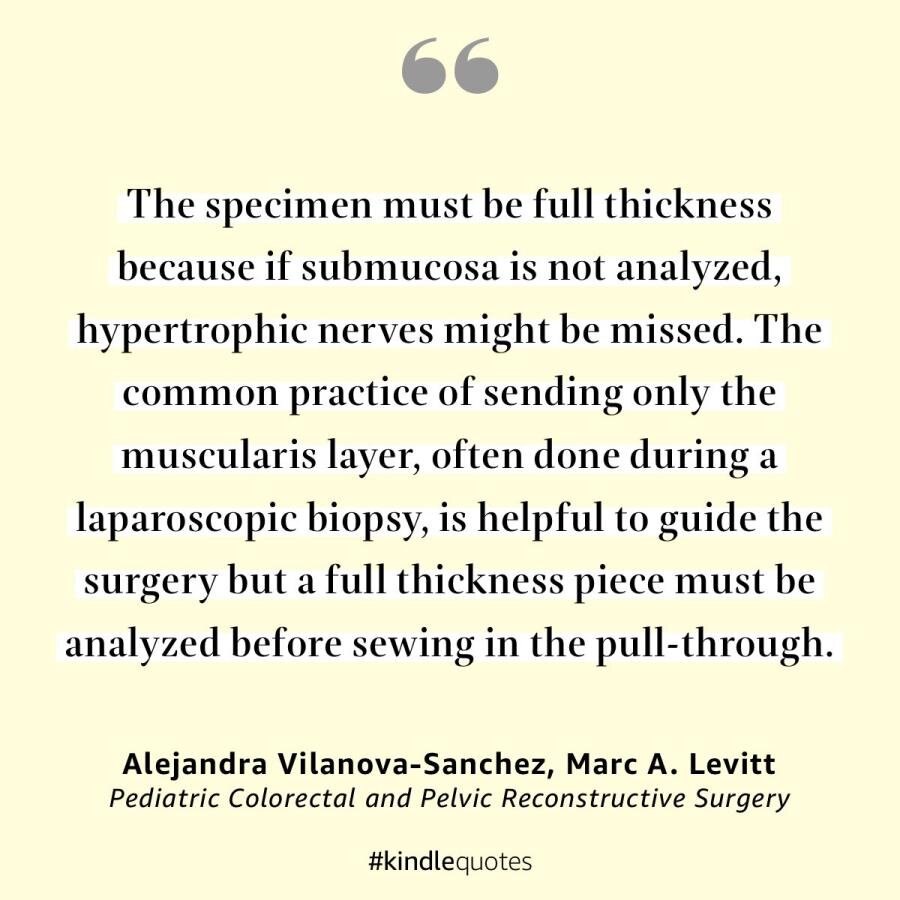
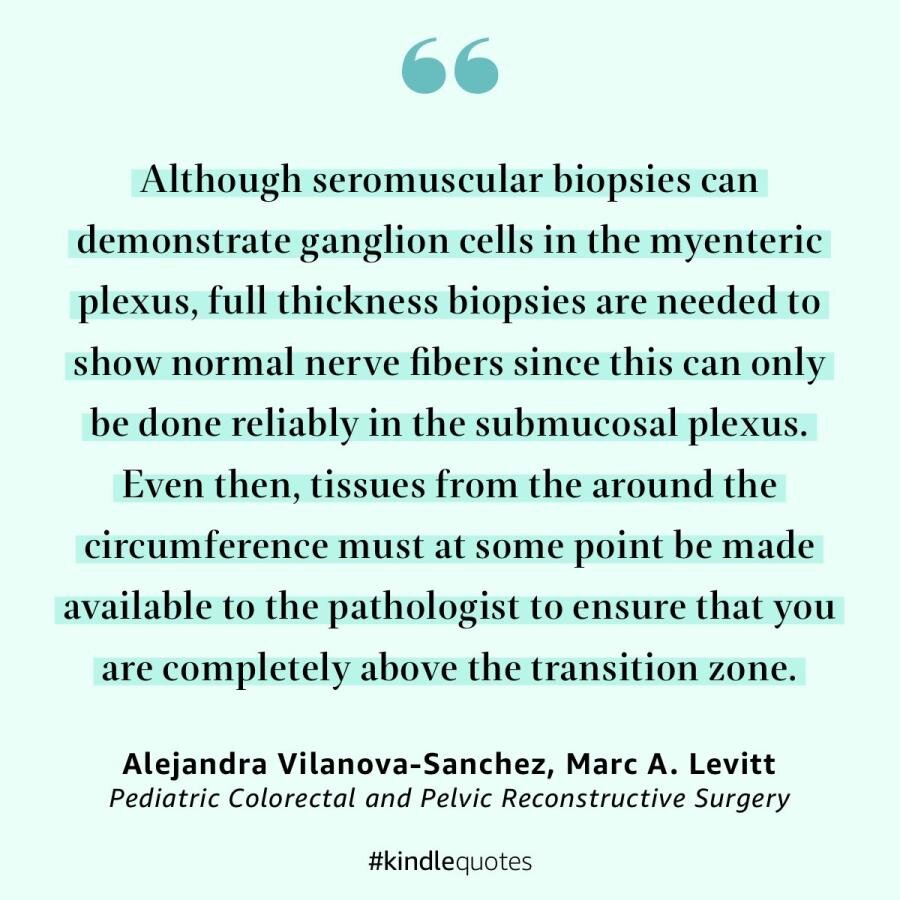
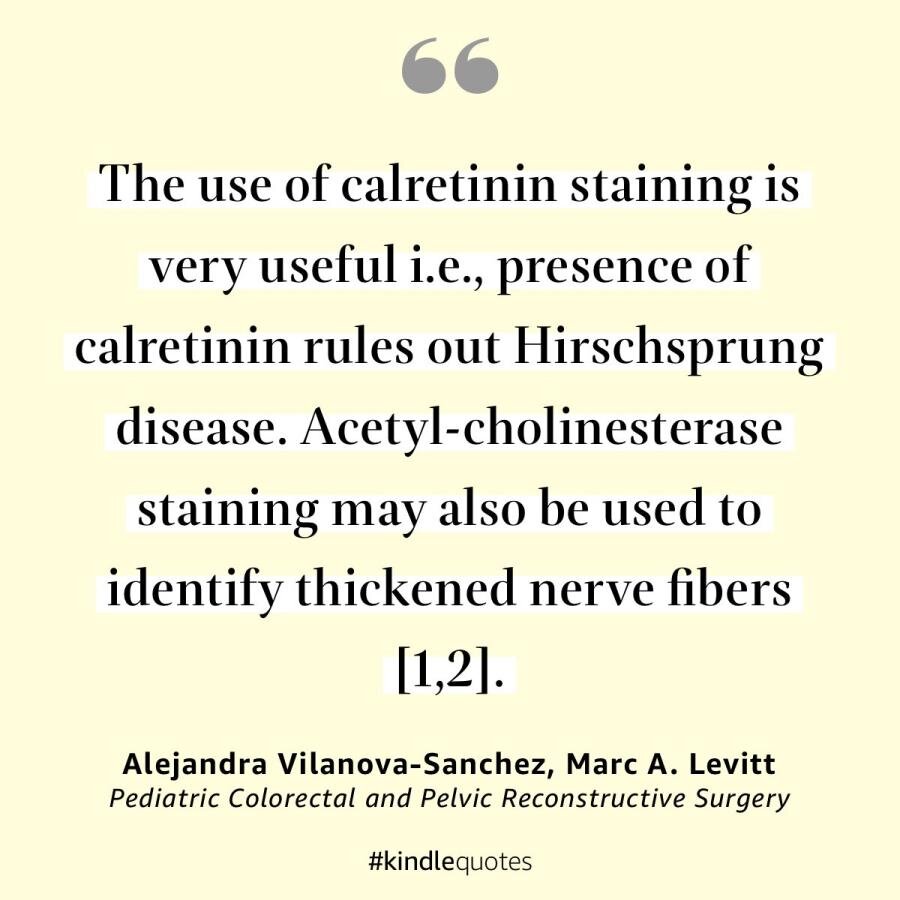
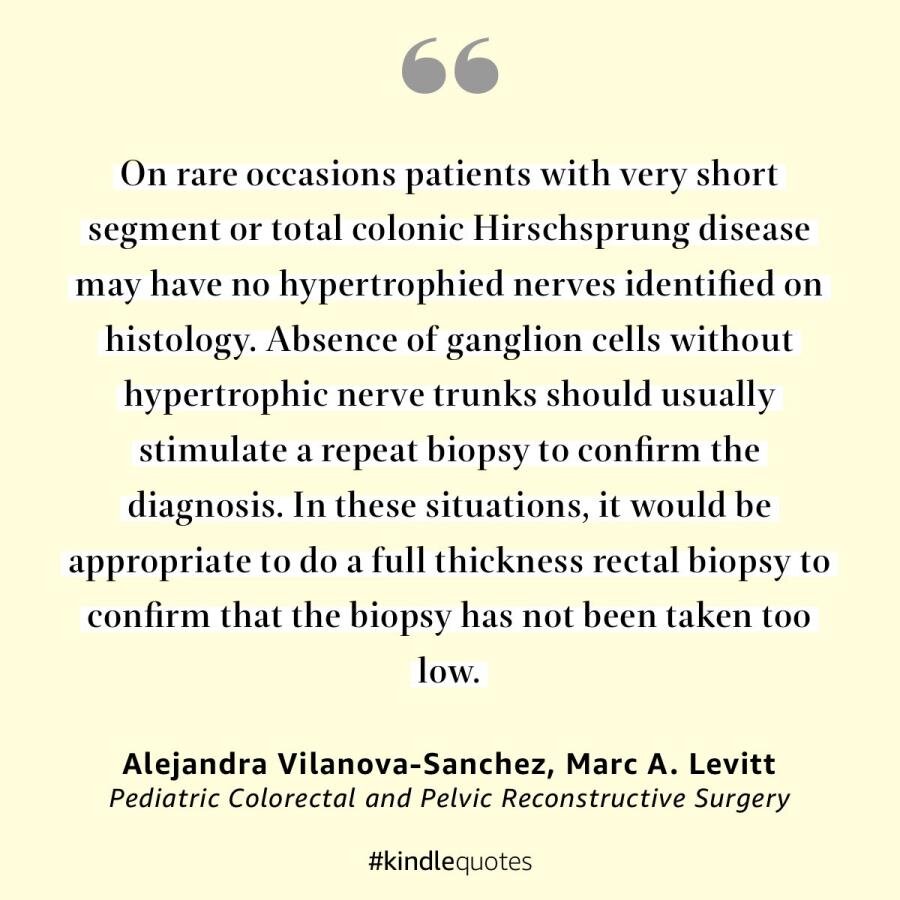
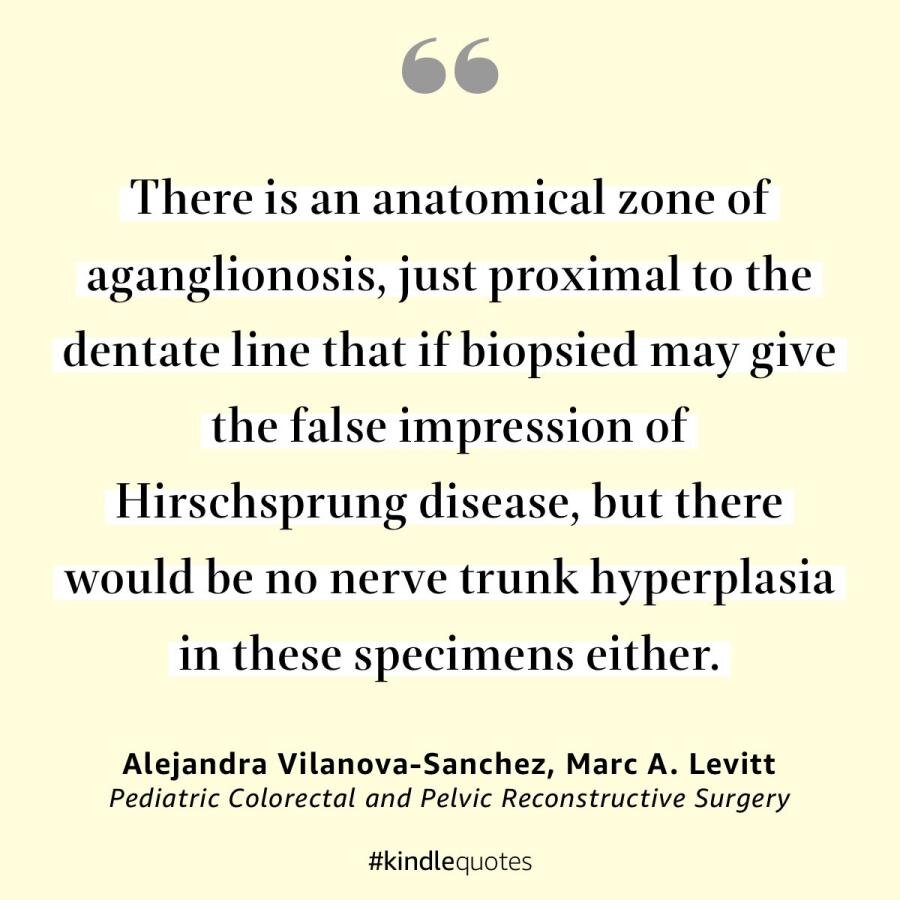
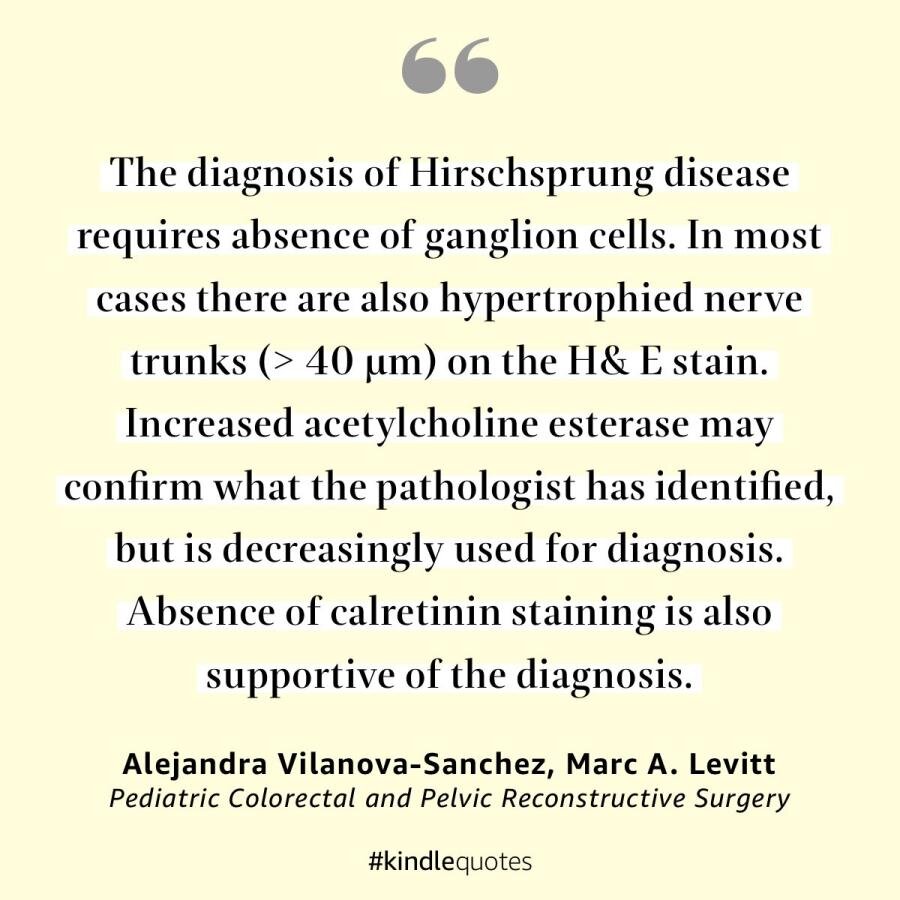
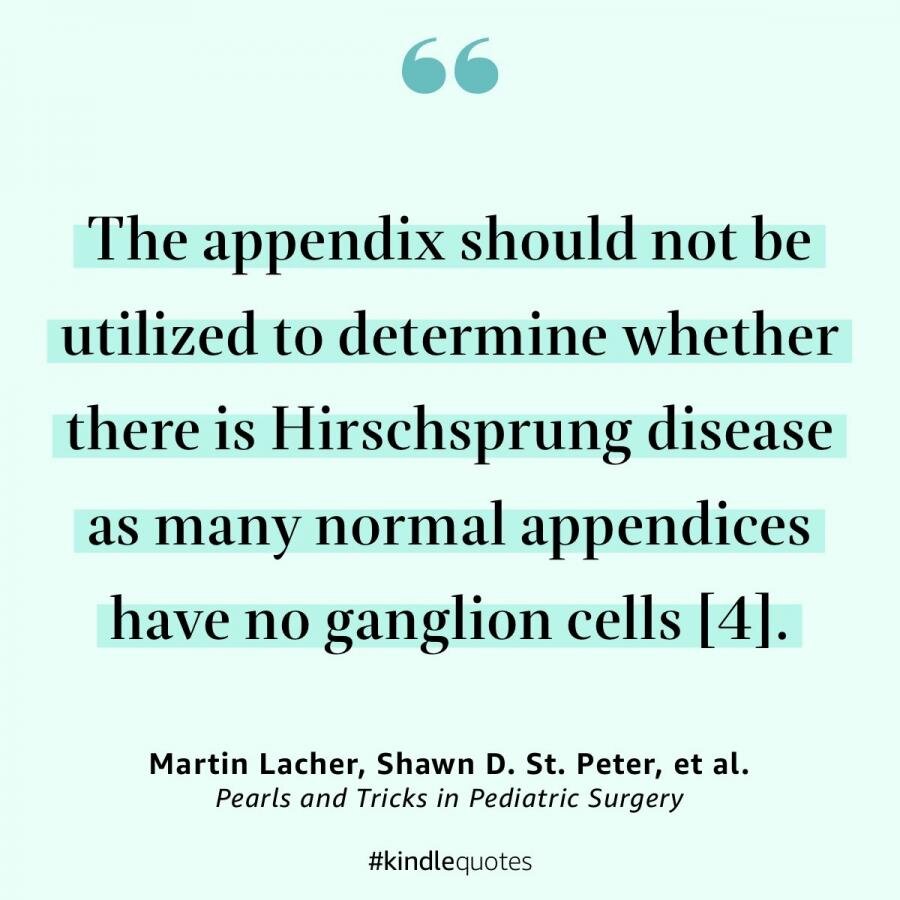
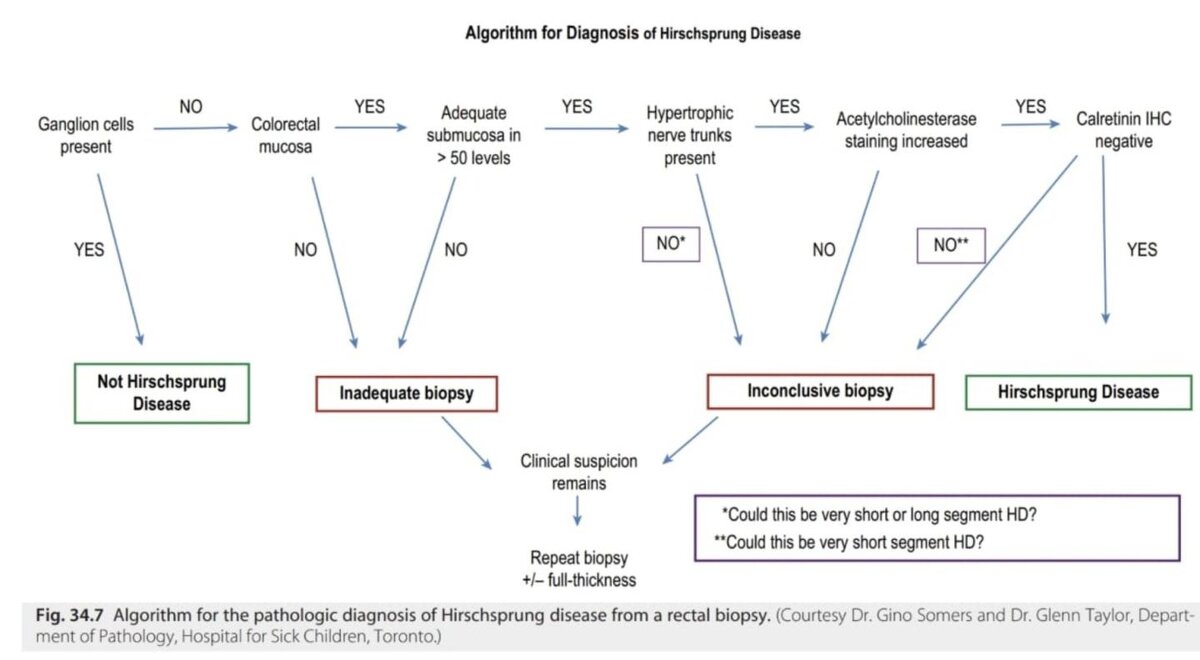
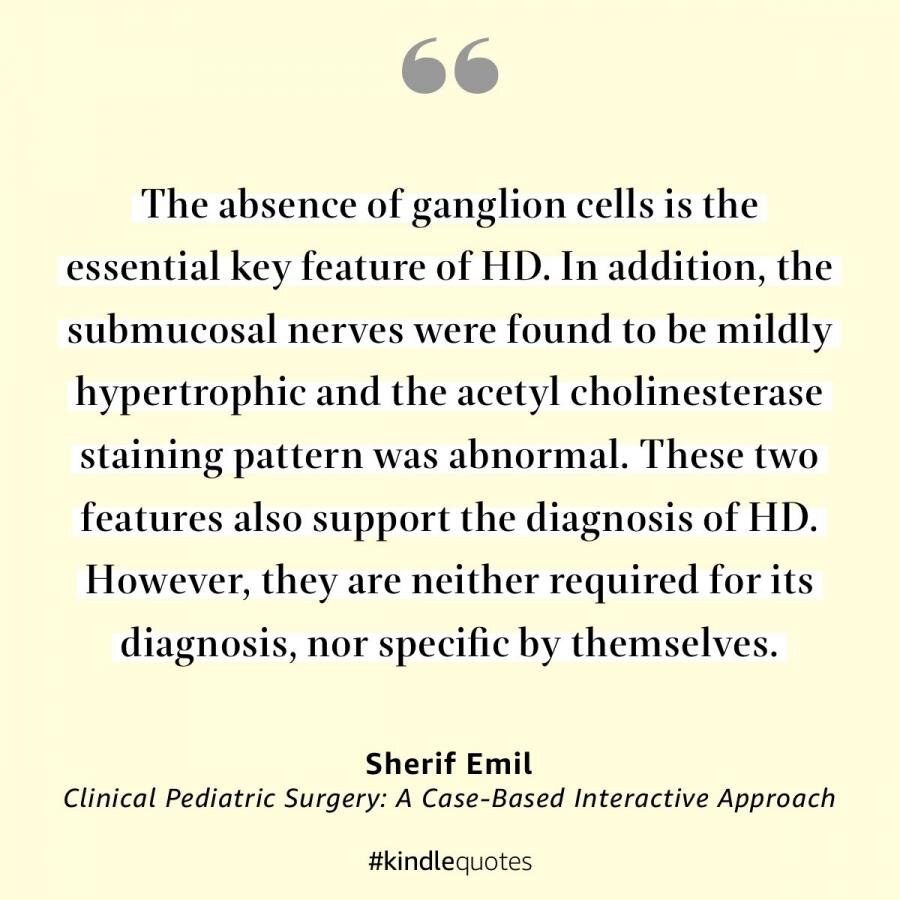
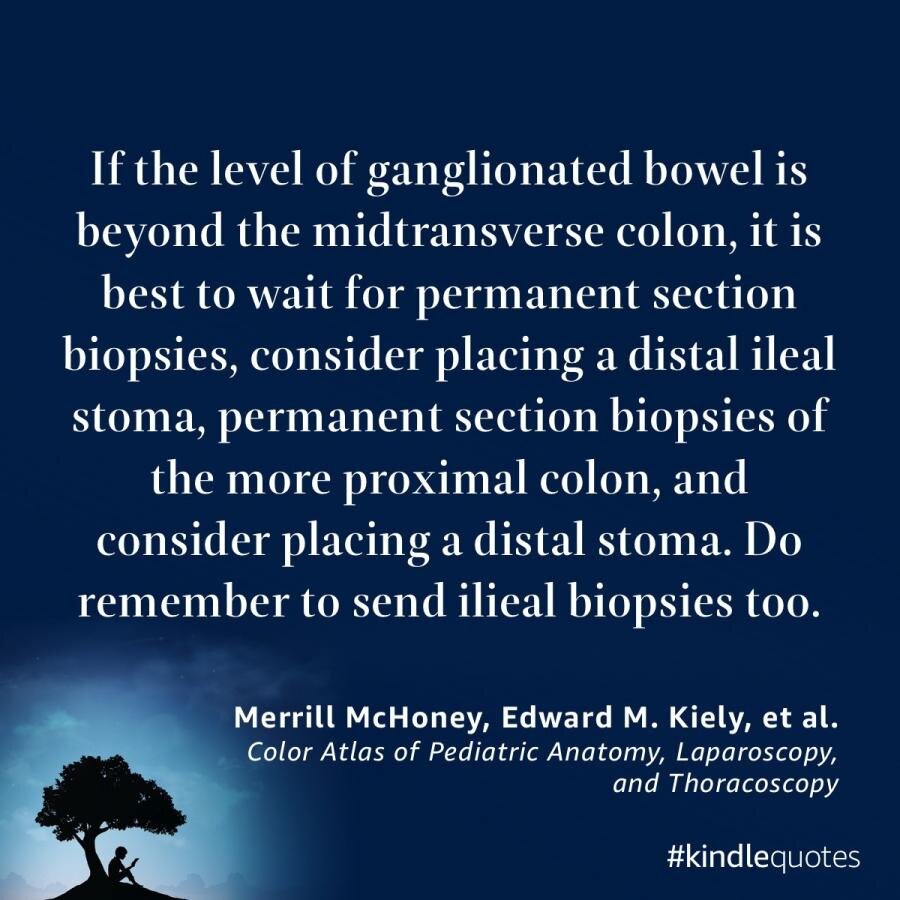
.thumb.jpg.2f5fcdfd31a1a9a03a29b1f79743864a.jpg) Quote from "The SAGES Manual of Pediatric Minimally Invasive Surgery" by Danielle S. Walsh, Todd A. Ponsky, Nicholas E. Bruns - "Suction rectal biopsy is the gold standard for making the diagnosis. There is a normal paucity of ganglia in the region of the internal sphincter; therefore the biopsy should be taken at least 1–2 cm above the dentate line. Acetylcholinesterase staining will demonstrate hypertrophied nerve trunks and a lack of normal ganglia in classical HD. Loss of calretinin immunostaining is also consistent with the diagnosis of HD [23]."
Quote from "The SAGES Manual of Pediatric Minimally Invasive Surgery" by Danielle S. Walsh, Todd A. Ponsky, Nicholas E. Bruns - "Suction rectal biopsy is the gold standard for making the diagnosis. There is a normal paucity of ganglia in the region of the internal sphincter; therefore the biopsy should be taken at least 1–2 cm above the dentate line. Acetylcholinesterase staining will demonstrate hypertrophied nerve trunks and a lack of normal ganglia in classical HD. Loss of calretinin immunostaining is also consistent with the diagnosis of HD [23]."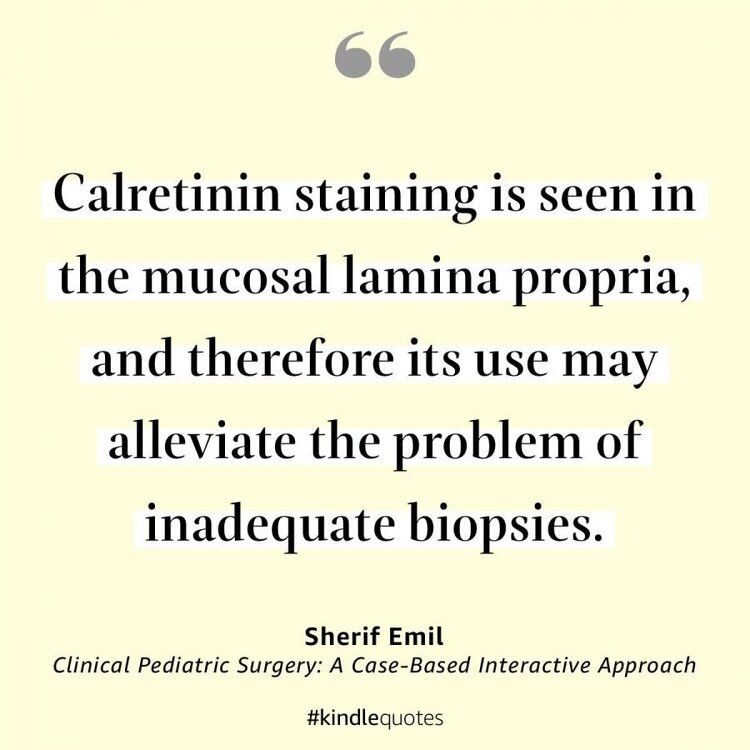
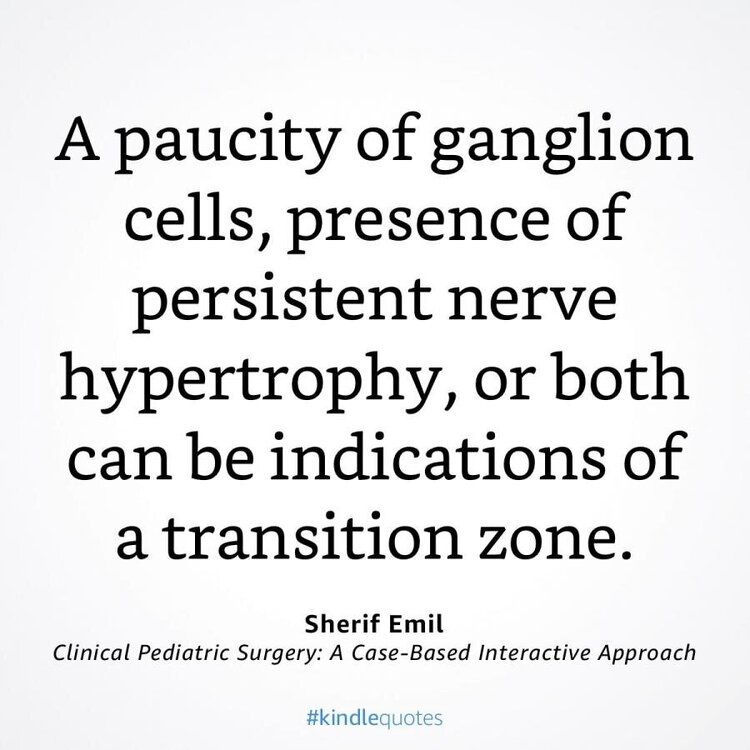
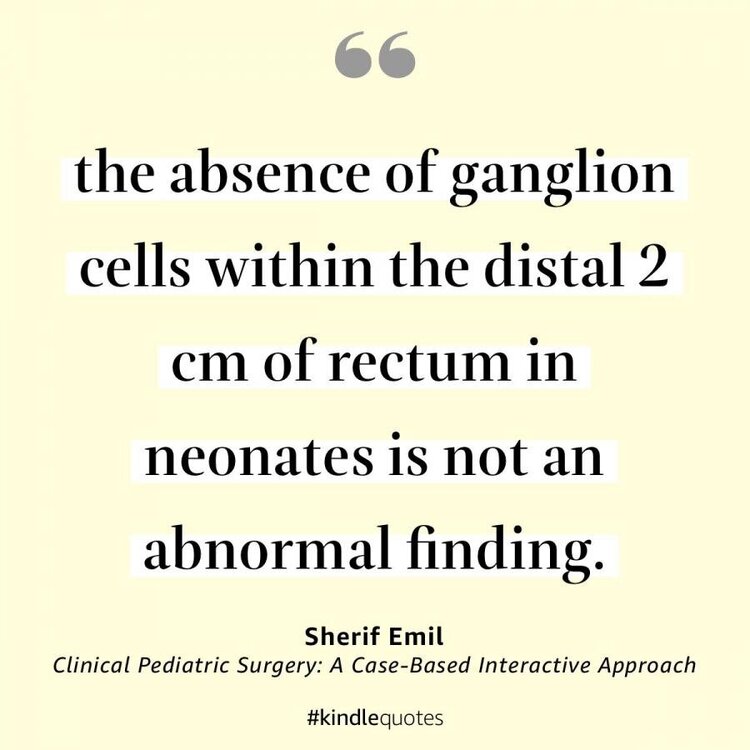
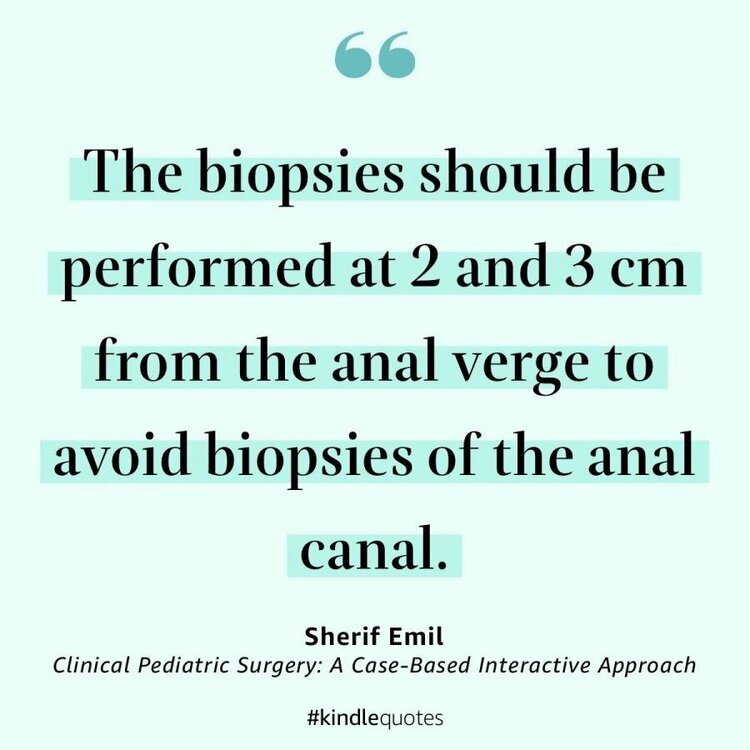
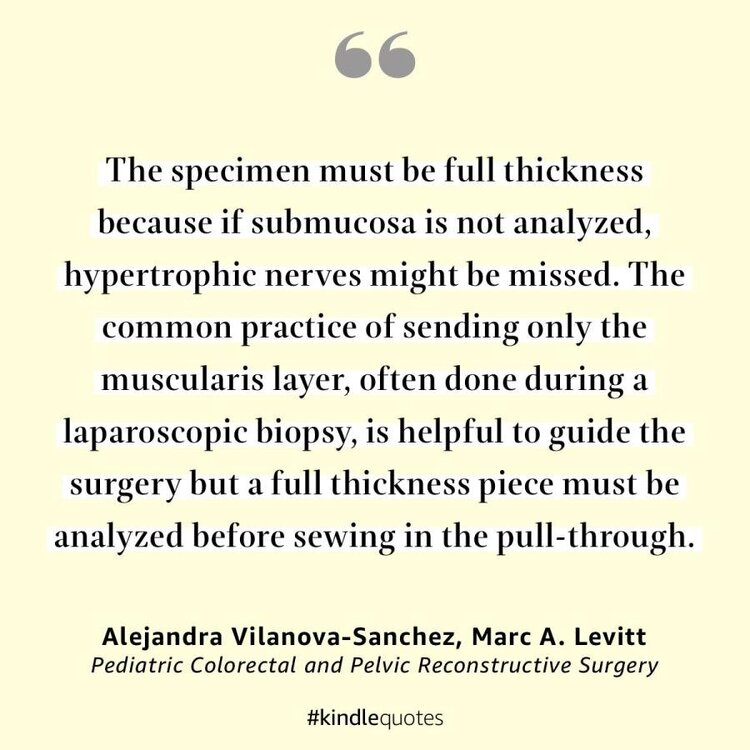
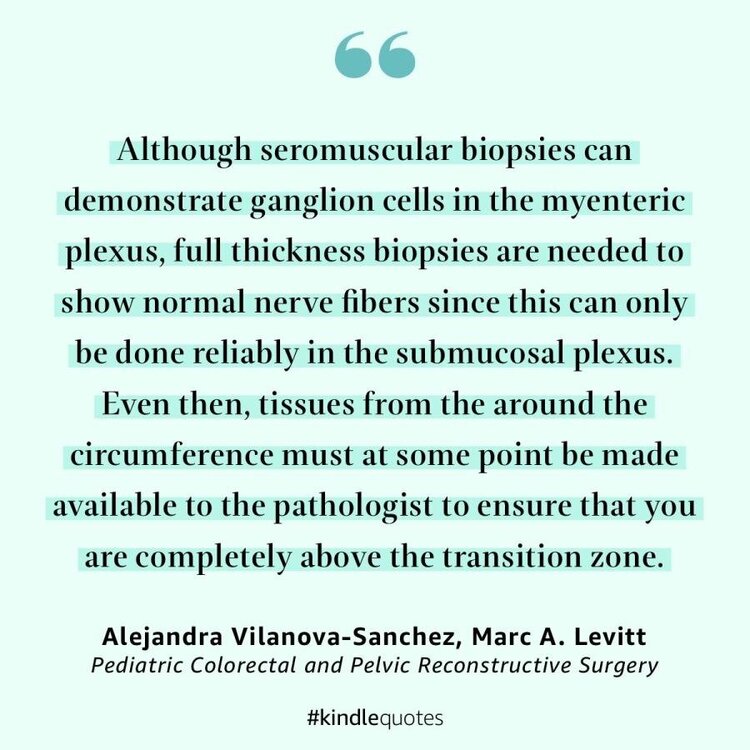
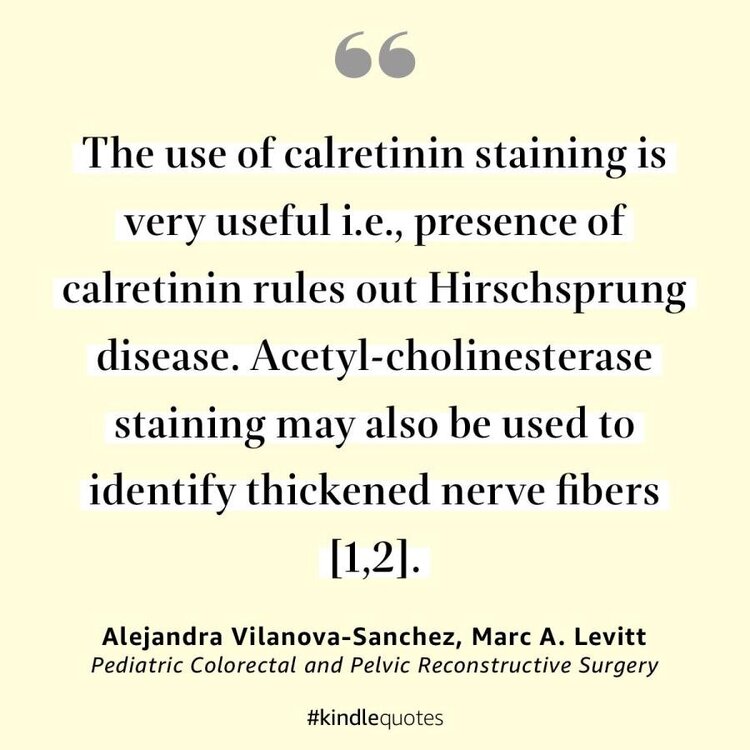
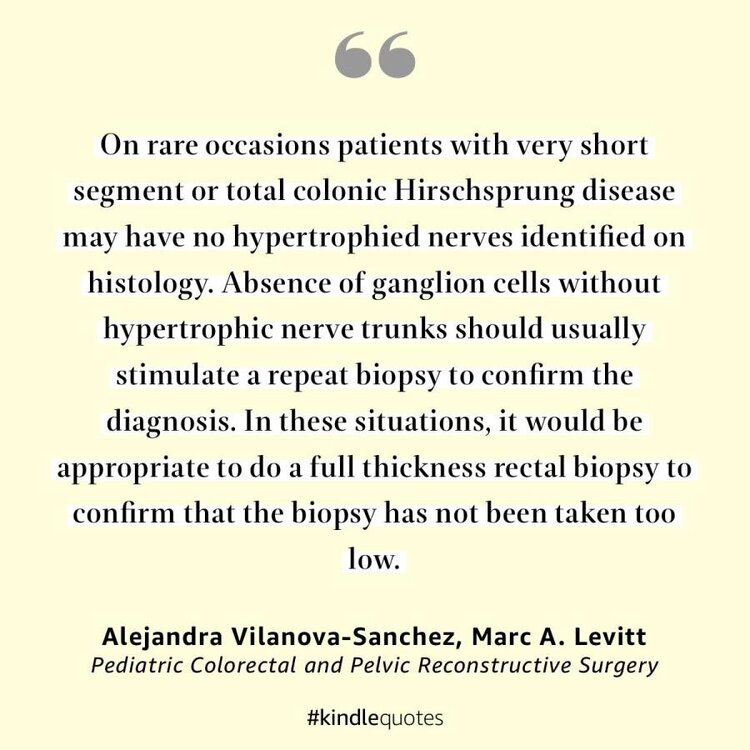
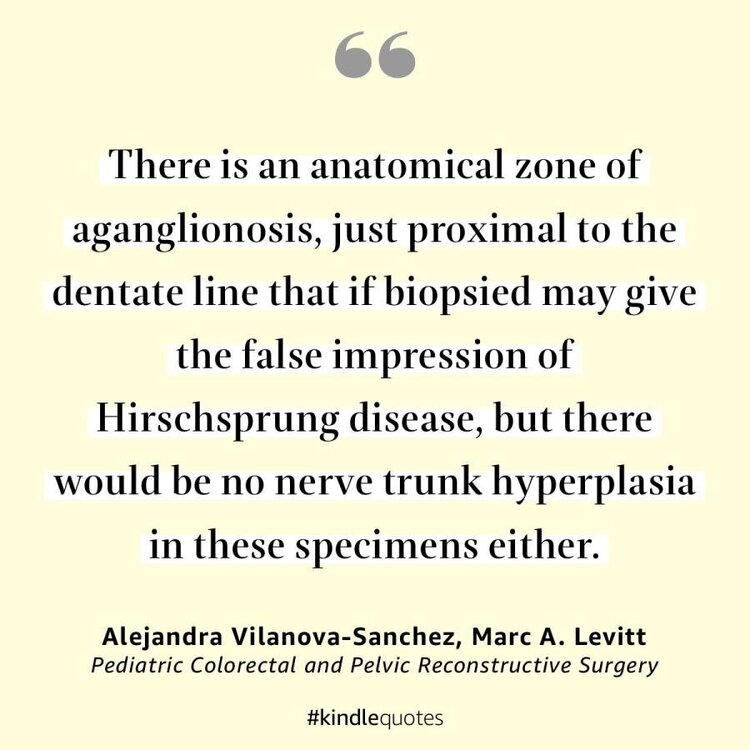
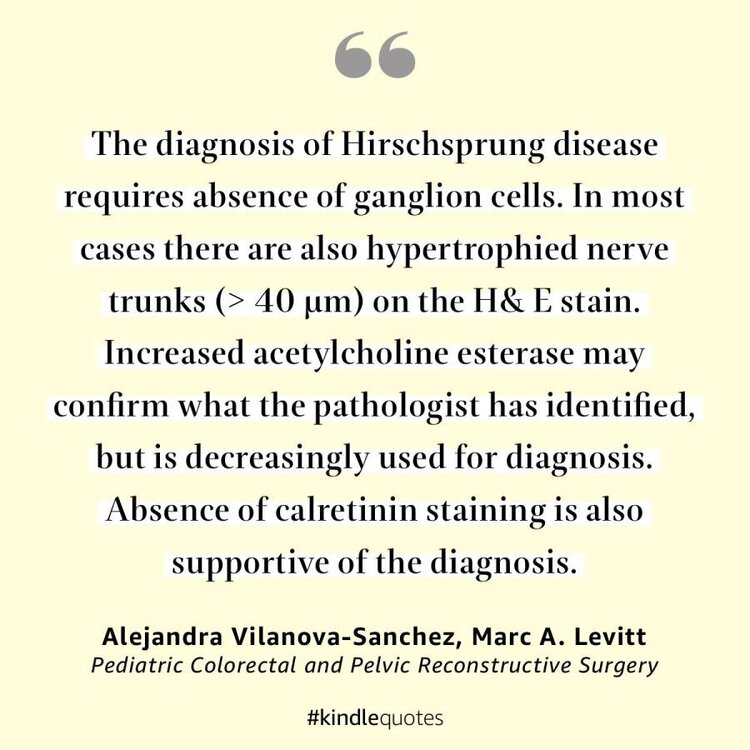
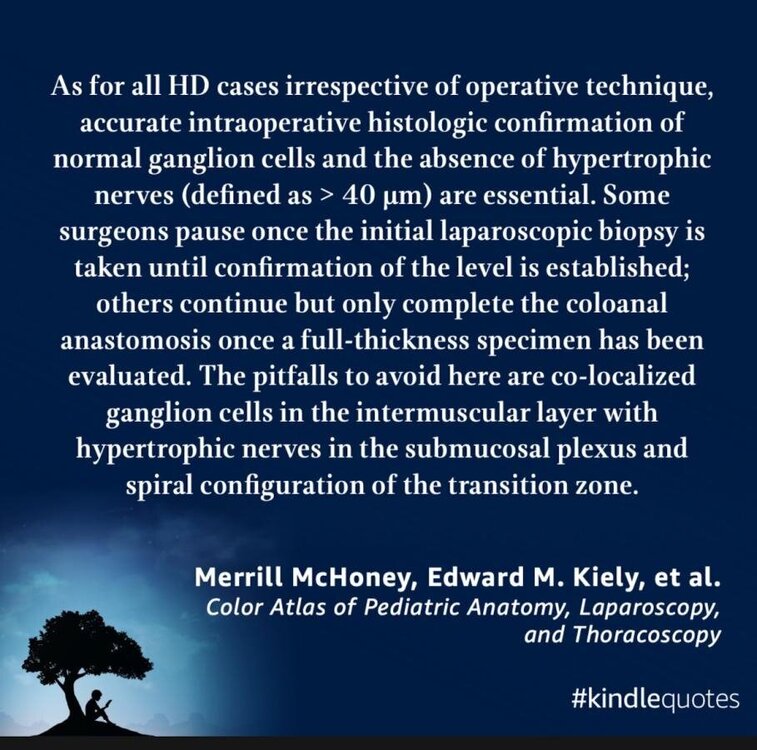
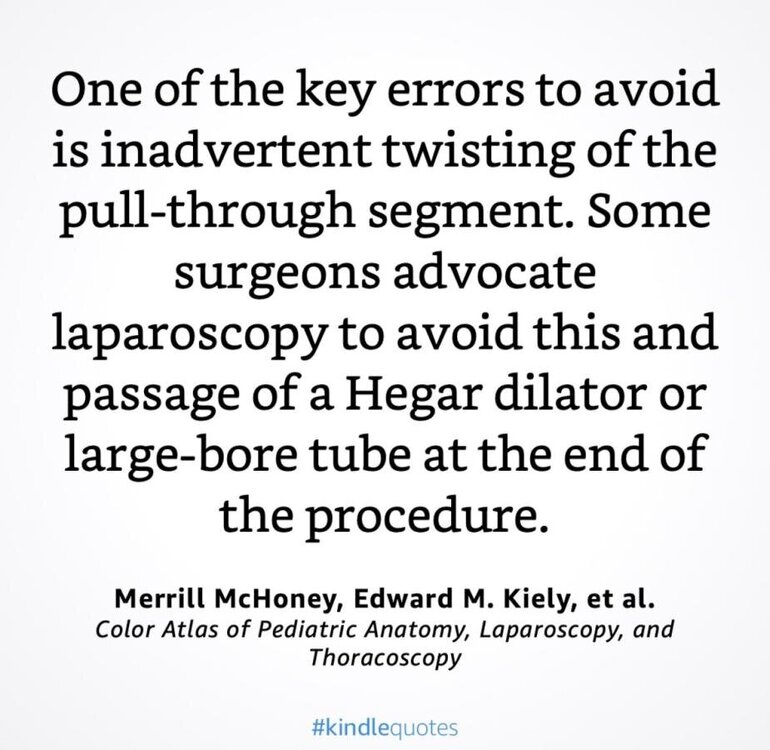
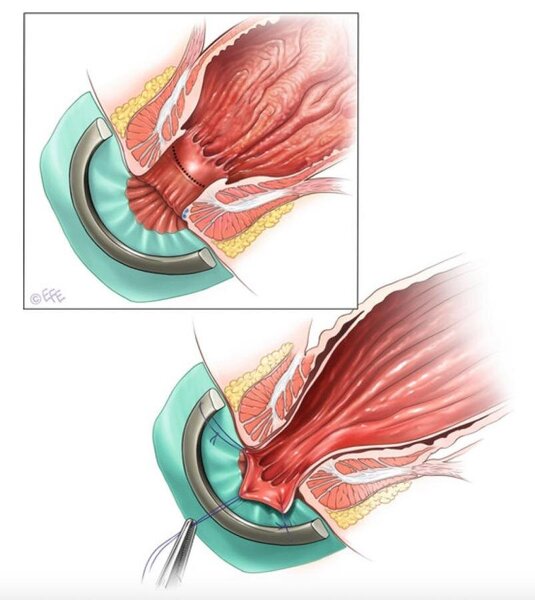
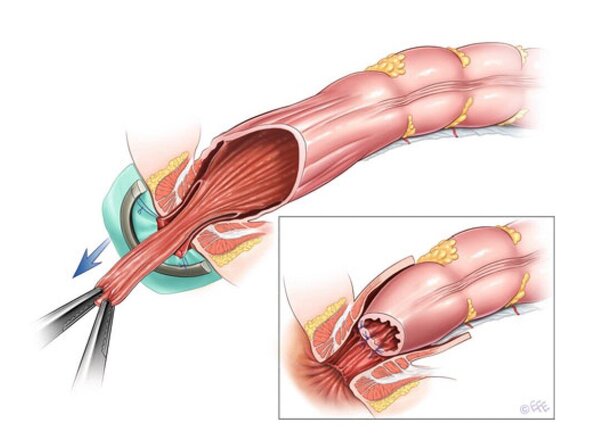
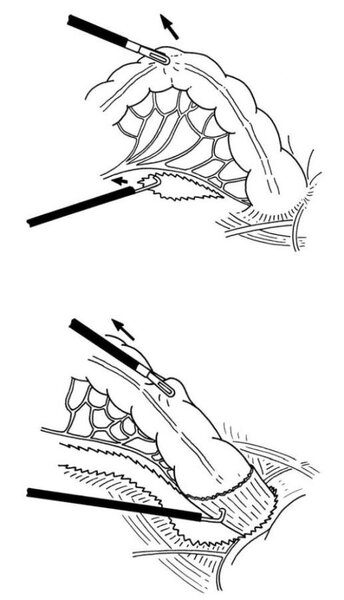
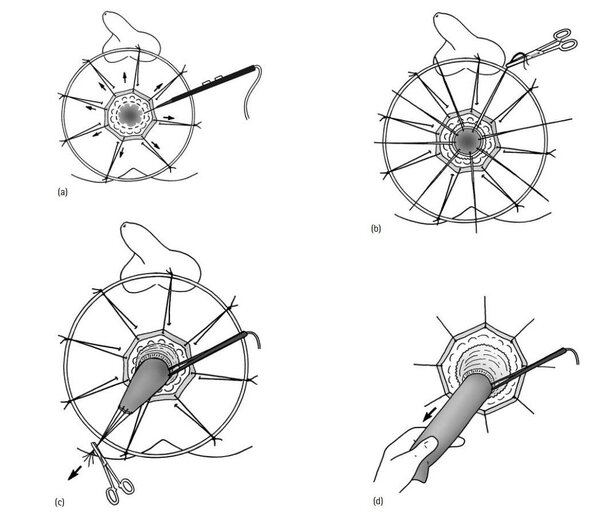
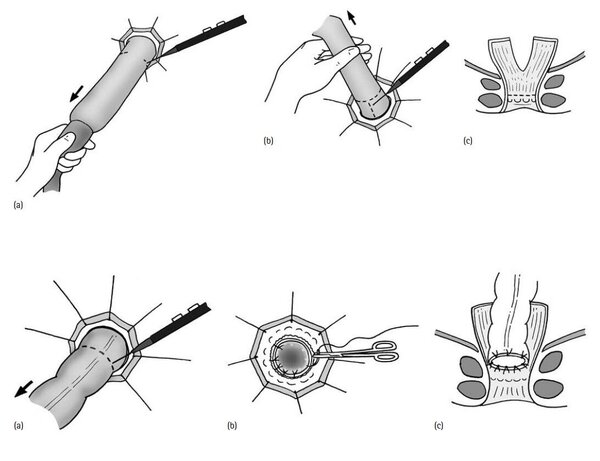
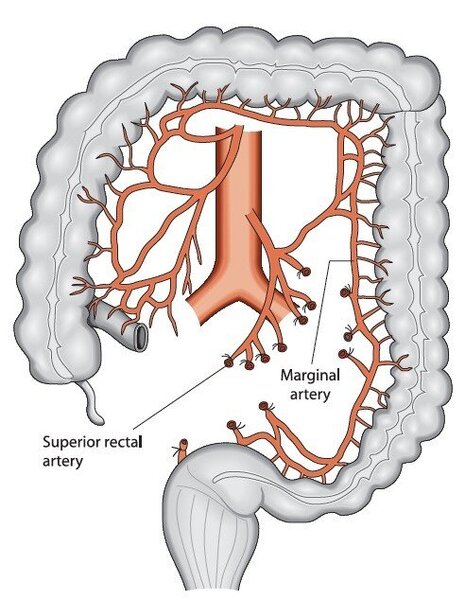
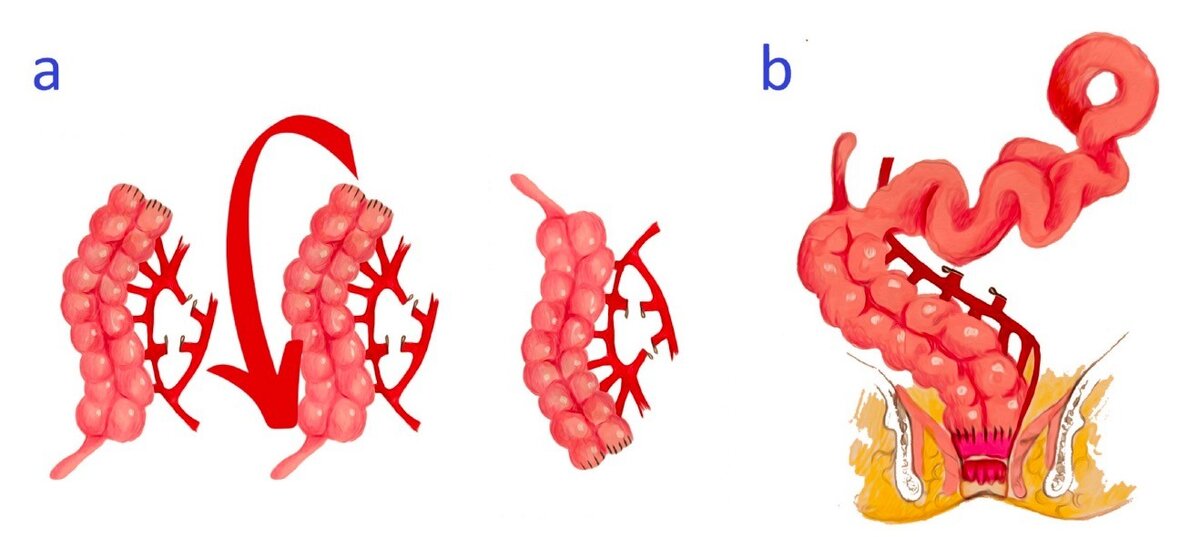
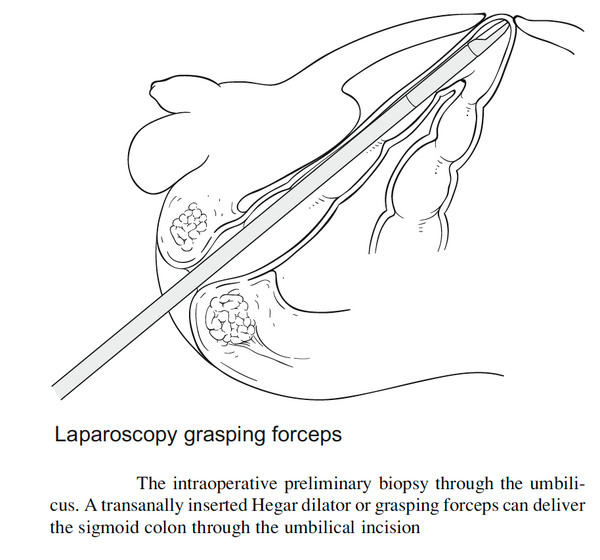
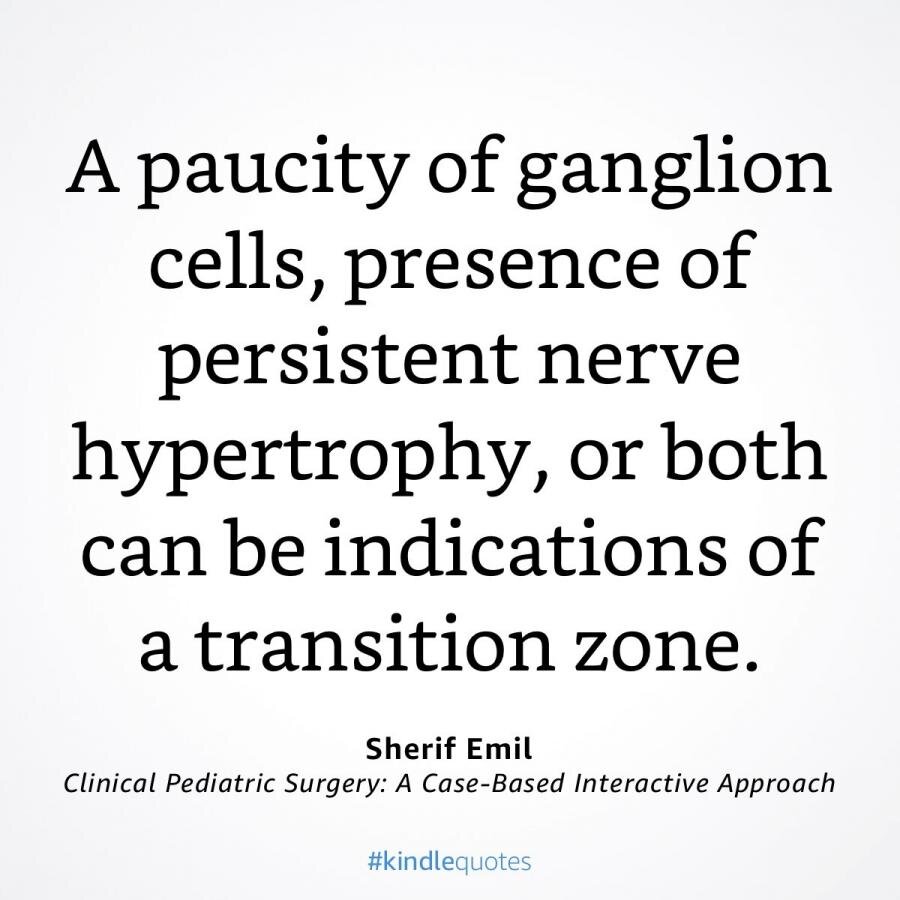
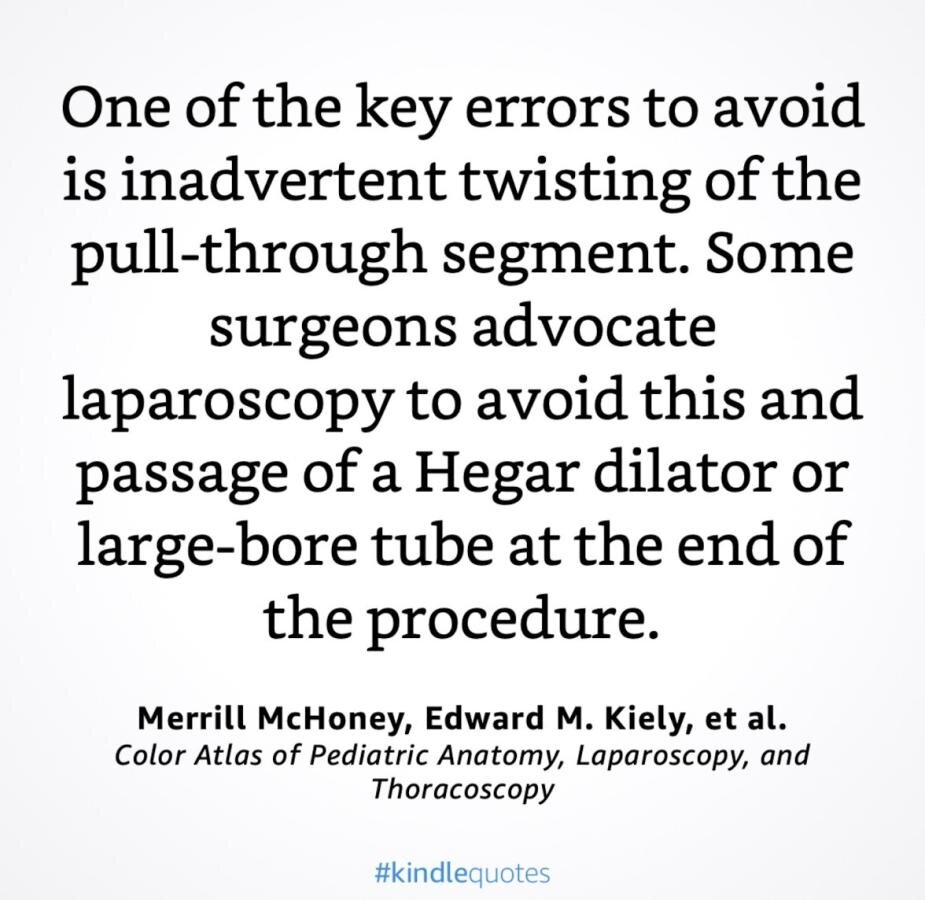
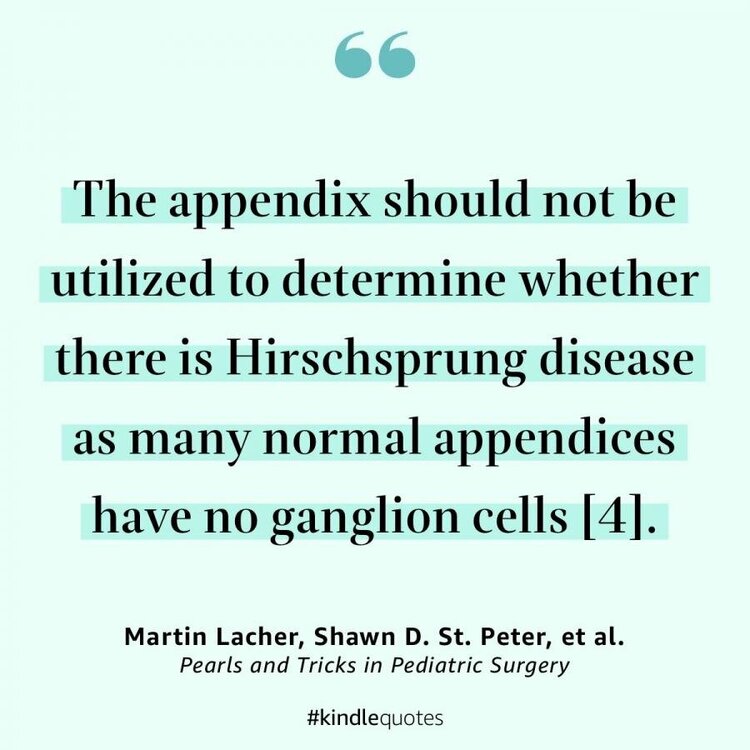 Quote from "The SAGES Manual of Pediatric Minimally Invasive Surgery" by Danielle S. Walsh, Todd A. Ponsky, Nicholas E. Bruns - "The diagnosis of HD must be confirmed by an experienced, reliable pathologist with a rectal biopsy. This technique is best suited for short-segment disease, and ideally the patient would have a barium enema study demonstrating a distal transition zone. Longer segment disease is a relative contraindication for this surgical option, and these patients may be better served by a Duhamel procedure l. Prematurity is a relative contraindication, as these patients may not have fully mature ganglion cells and histologic evaluation of biopsies may therefore not be reliable. The patients are managed with rectal stimulation and irrigation until term. Strict contraindications include significant malnutrition, active enterocolitis, or massively dilated proximal bowel; these patients should undergo a staged procedure, with an initial colostomy and a definitive operation once the contraindication has resolved."Quote from "ESPES Manual of Pediatric Minimally Invasive Surgery" by Ciro Esposito, François Becmeur, Henri Steyaert, Philipp Szavay - "compared to totally transanal endorectal pull-through, the Soave-Georgeson technique allows to better assess the colon pedicle tension, to avoid colon twisting, and to perform intraoperative colon biopsies before starting endorectal dissection and mesocolic vessel division."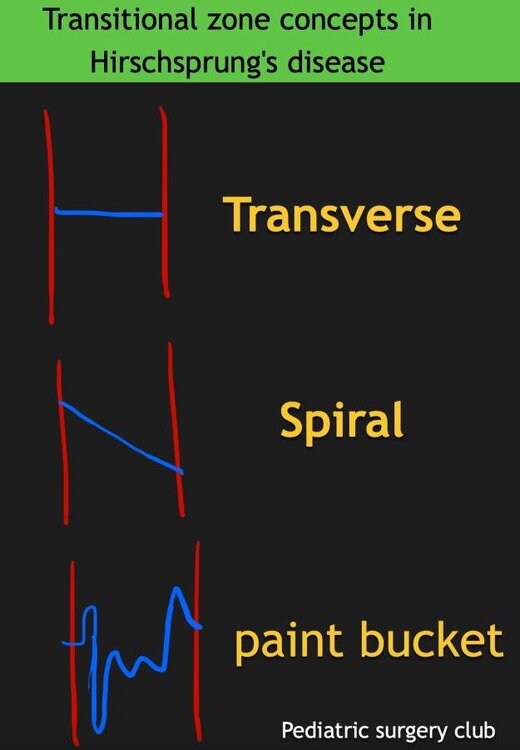

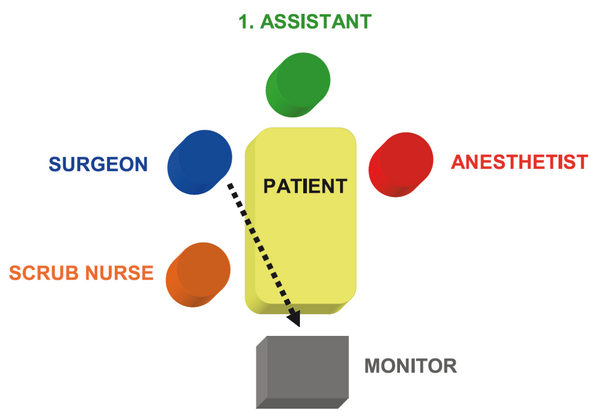
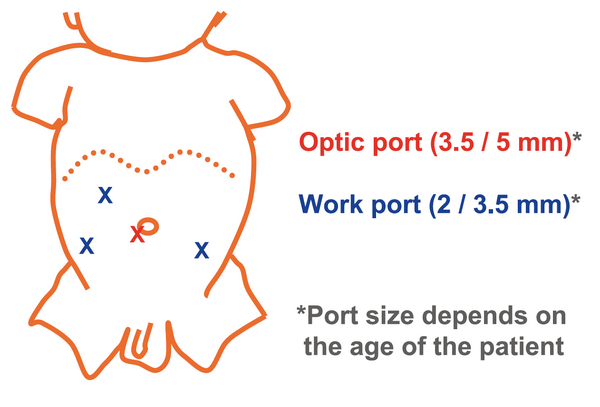
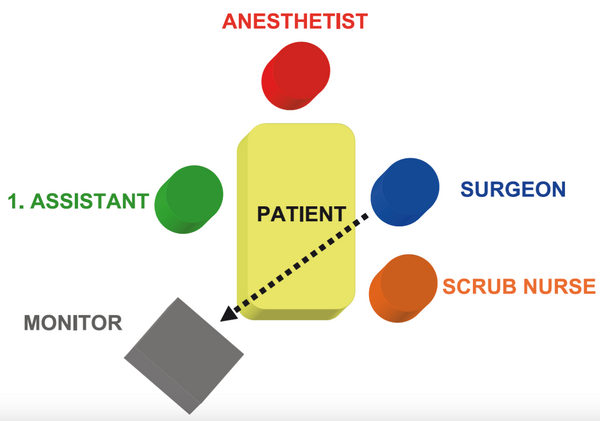
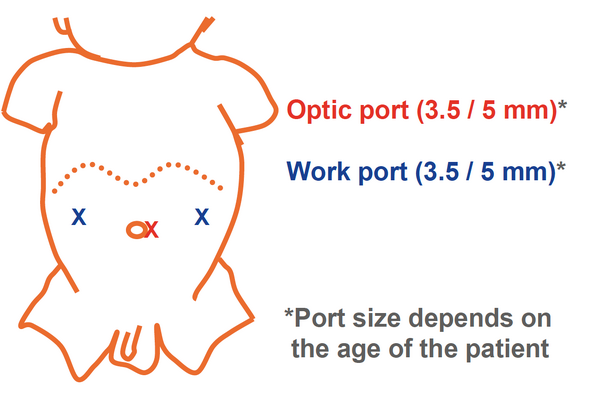

.jpg.78d0af329082d38680d82c7c9eabb90c.jpg)



(2).jpg.6ab3f8ed754ae85c176d2492ac164f34.jpg)
Account
Navigation
Search
Configure browser push notifications
Chrome (Android)
- Tap the lock icon next to the address bar.
- Tap Permissions → Notifications.
- Adjust your preference.
Chrome (Desktop)
- Click the padlock icon in the address bar.
- Select Site settings.
- Find Notifications and adjust your preference.
Safari (iOS 16.4+)
- Ensure the site is installed via Add to Home Screen.
- Open Settings App → Notifications.
- Find your app name and adjust your preference.
Safari (macOS)
- Go to Safari → Preferences.
- Click the Websites tab.
- Select Notifications in the sidebar.
- Find this website and adjust your preference.
Edge (Android)
- Tap the lock icon next to the address bar.
- Tap Permissions.
- Find Notifications and adjust your preference.
Edge (Desktop)
- Click the padlock icon in the address bar.
- Click Permissions for this site.
- Find Notifications and adjust your preference.
Firefox (Android)
- Go to Settings → Site permissions.
- Tap Notifications.
- Find this site in the list and adjust your preference.
Firefox (Desktop)
- Open Firefox Settings.
- Search for Notifications.
- Find this site in the list and adjust your preference.