

Everything posted by admin
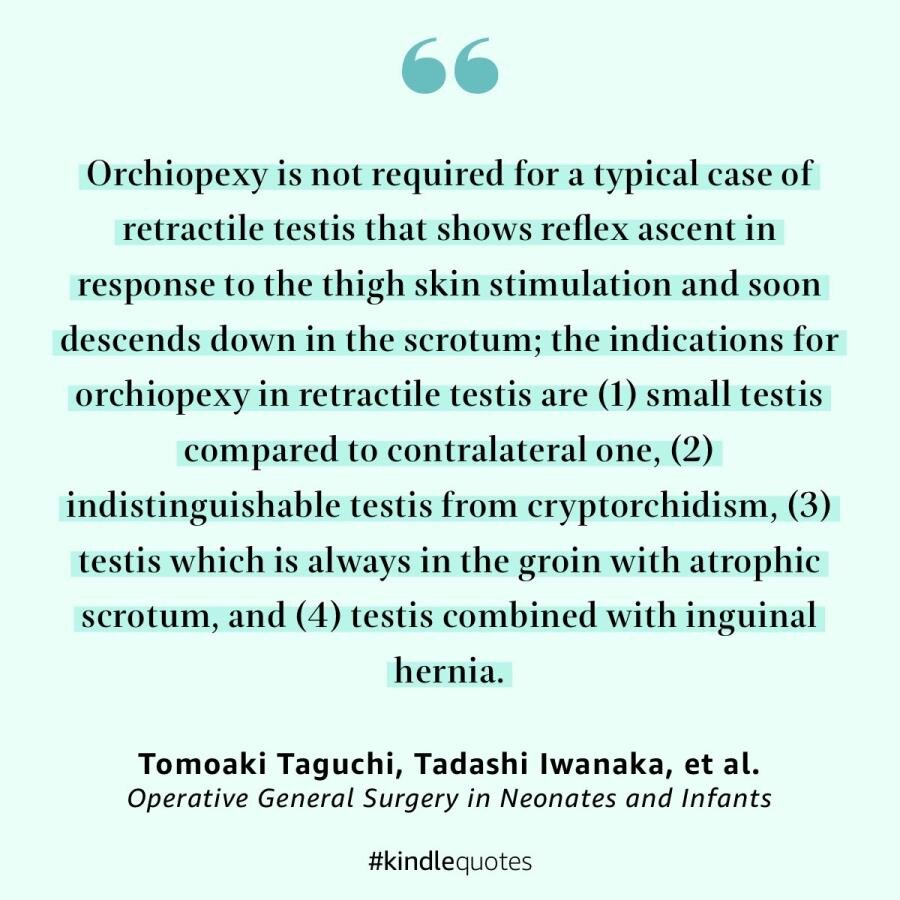
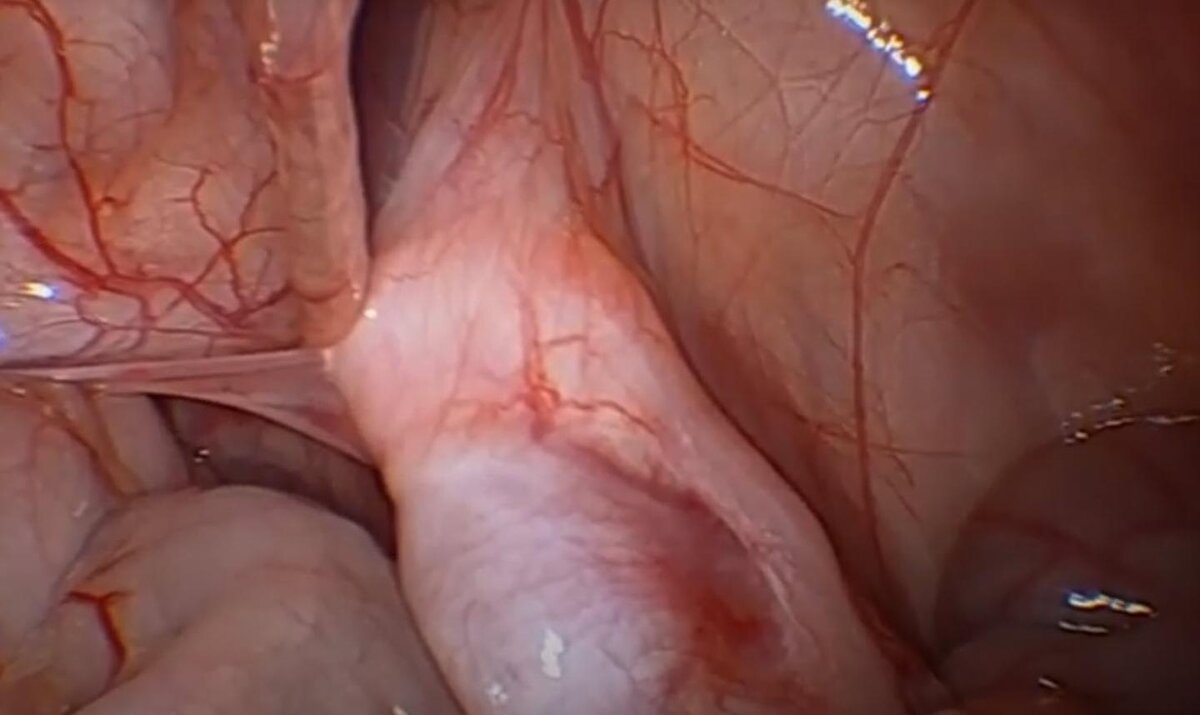
- 2024-08-19_20-21-35.jpg
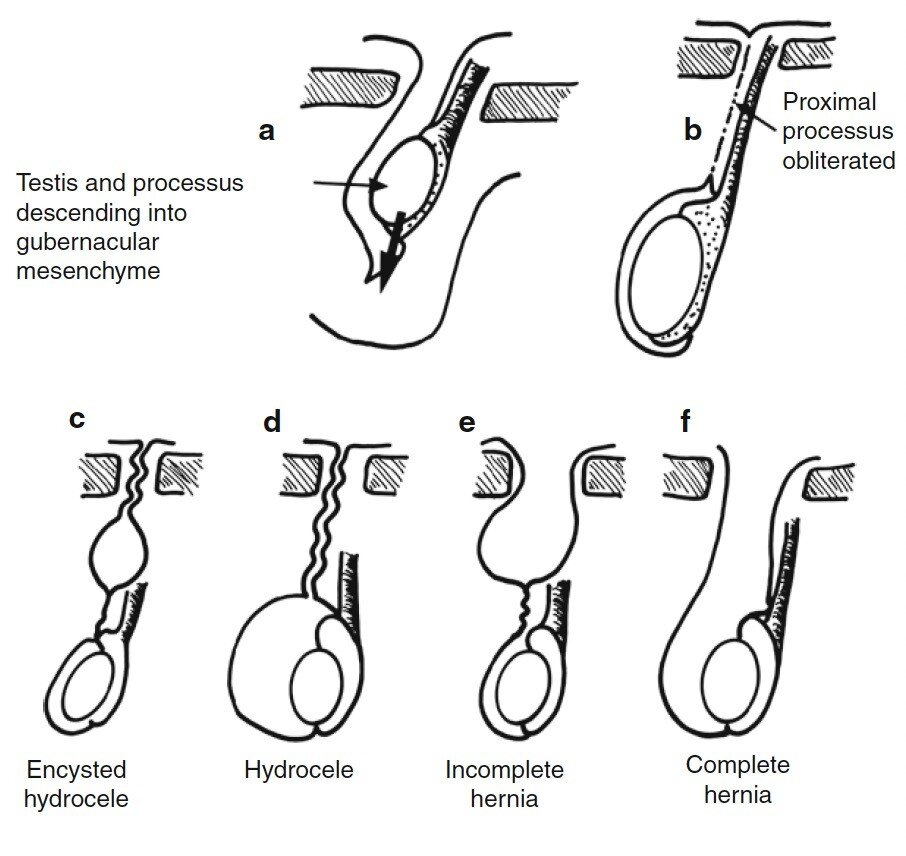
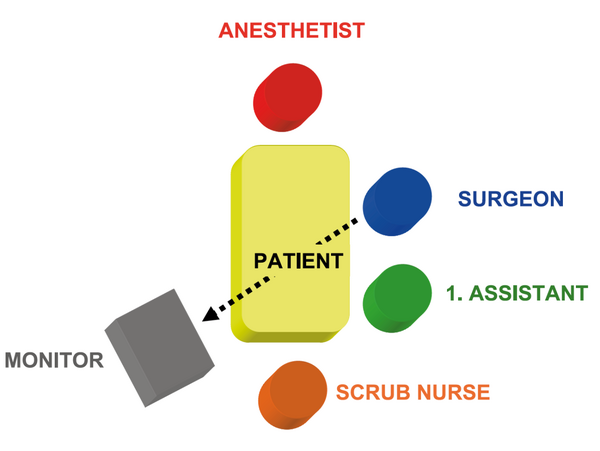
- 2024-08-19_20-20-14.jpg
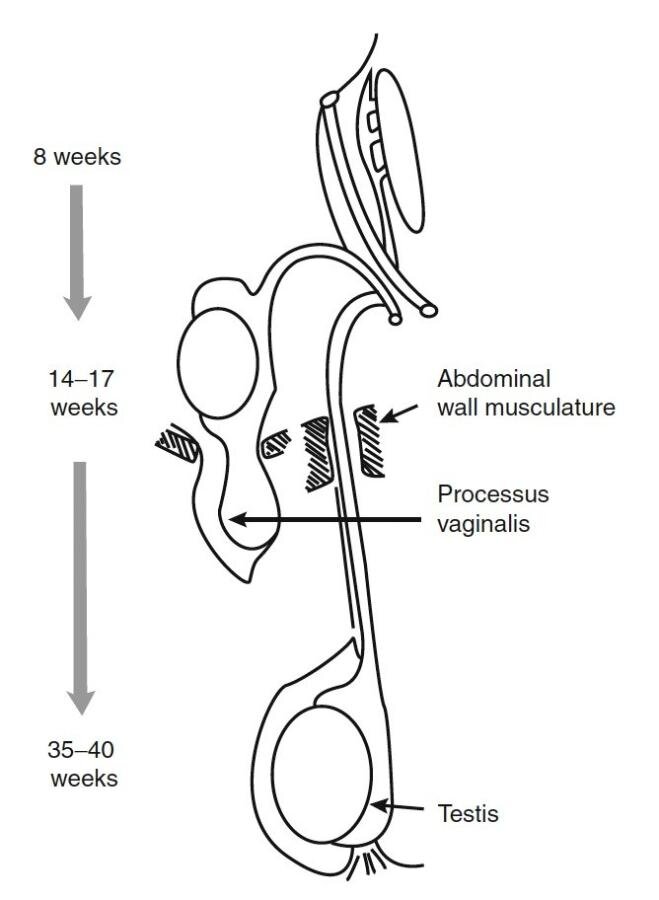
- 2024-08-19_20-17-55.jpg
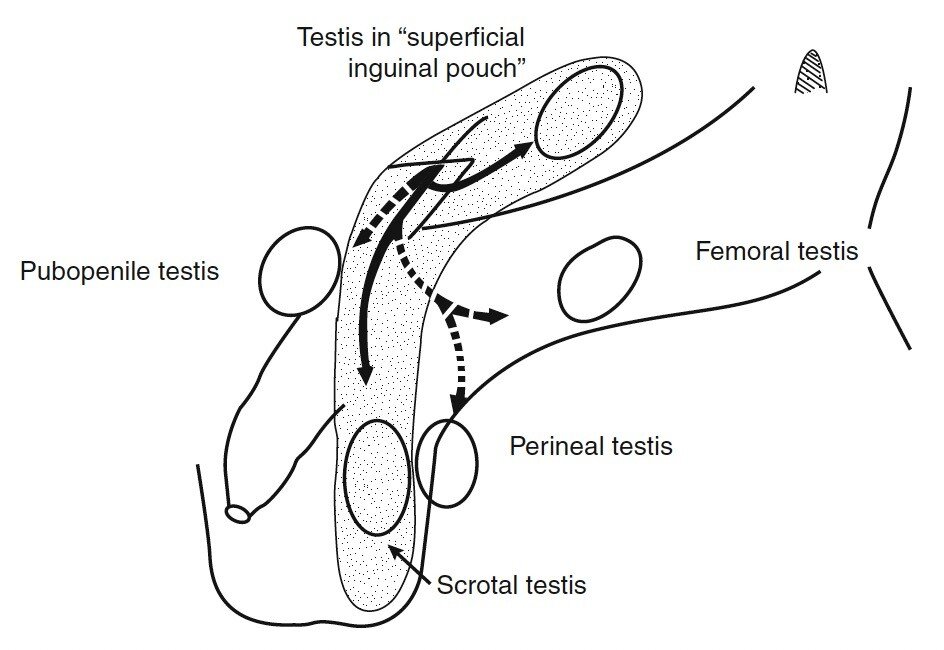
- 2024-08-19_20-17-55 (1).jpg
-
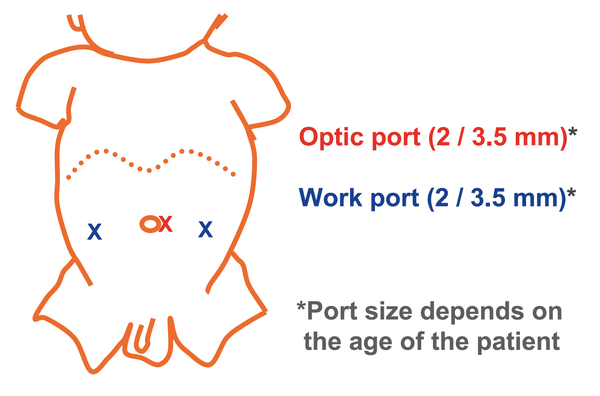
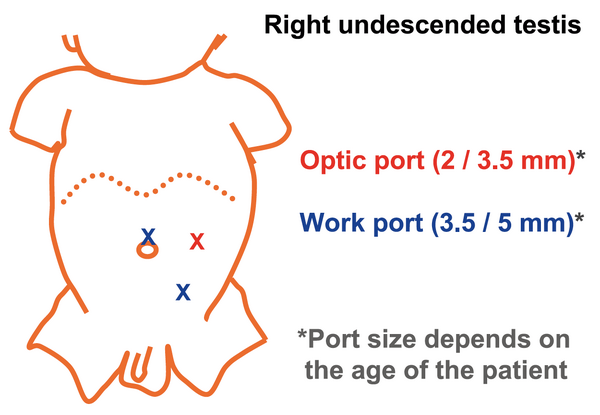
Laparoscopic Case Scenarios in Non Palpable Undescended Testis
-
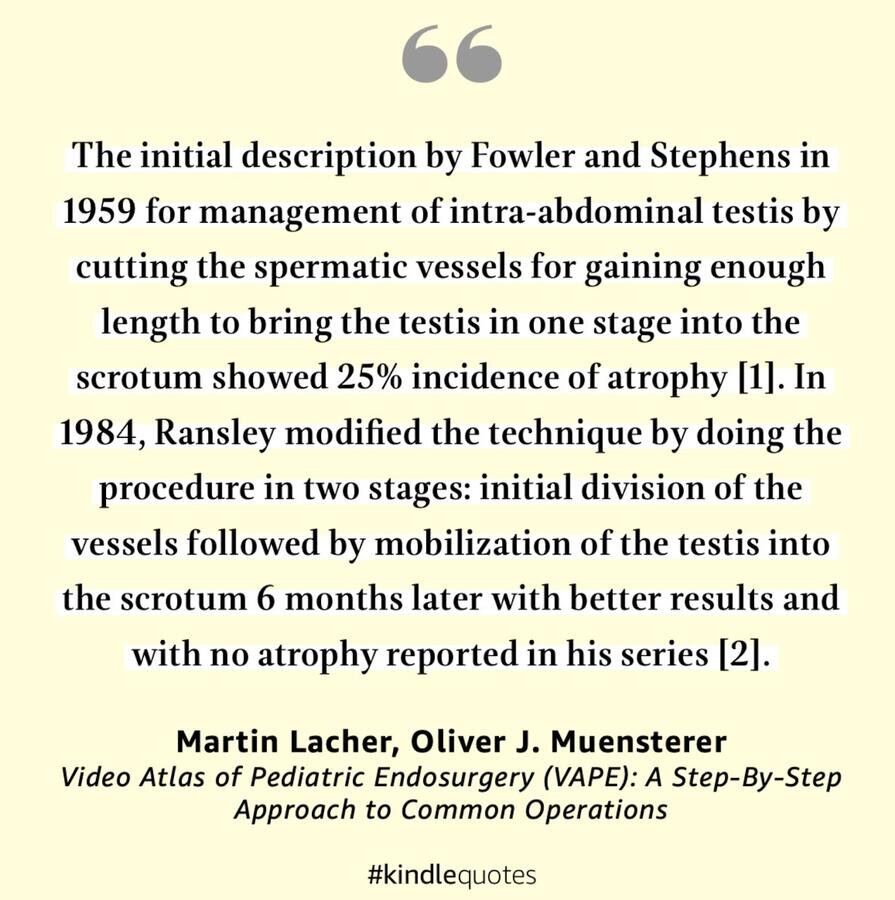
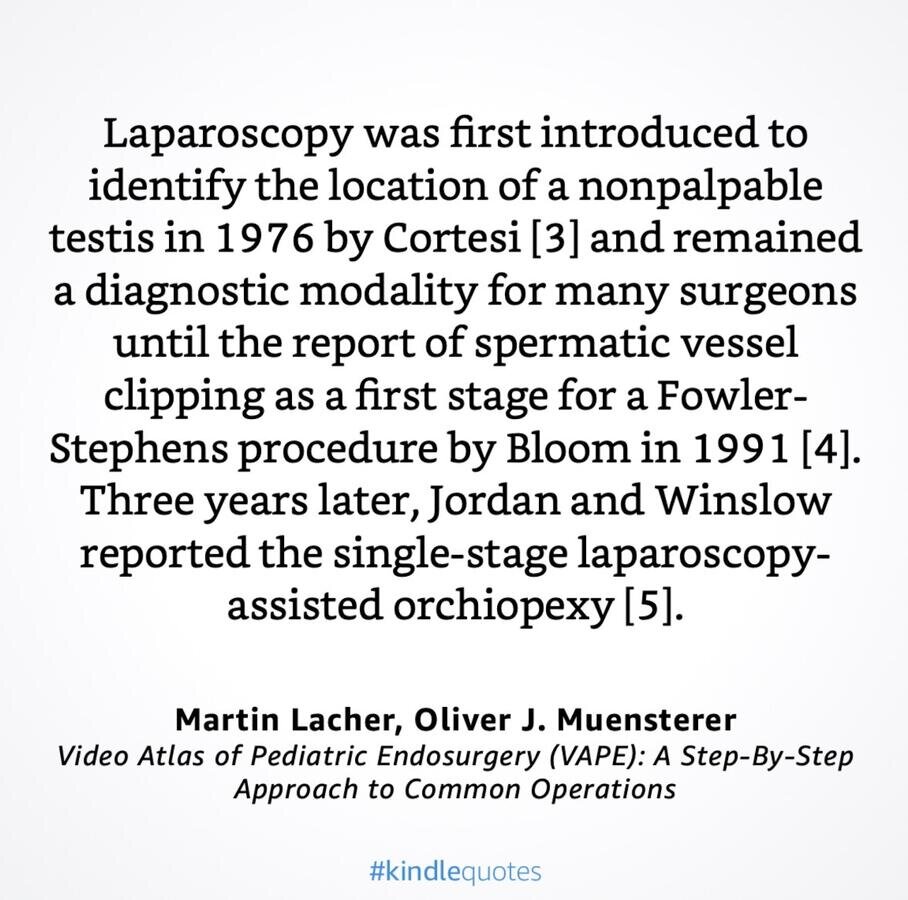
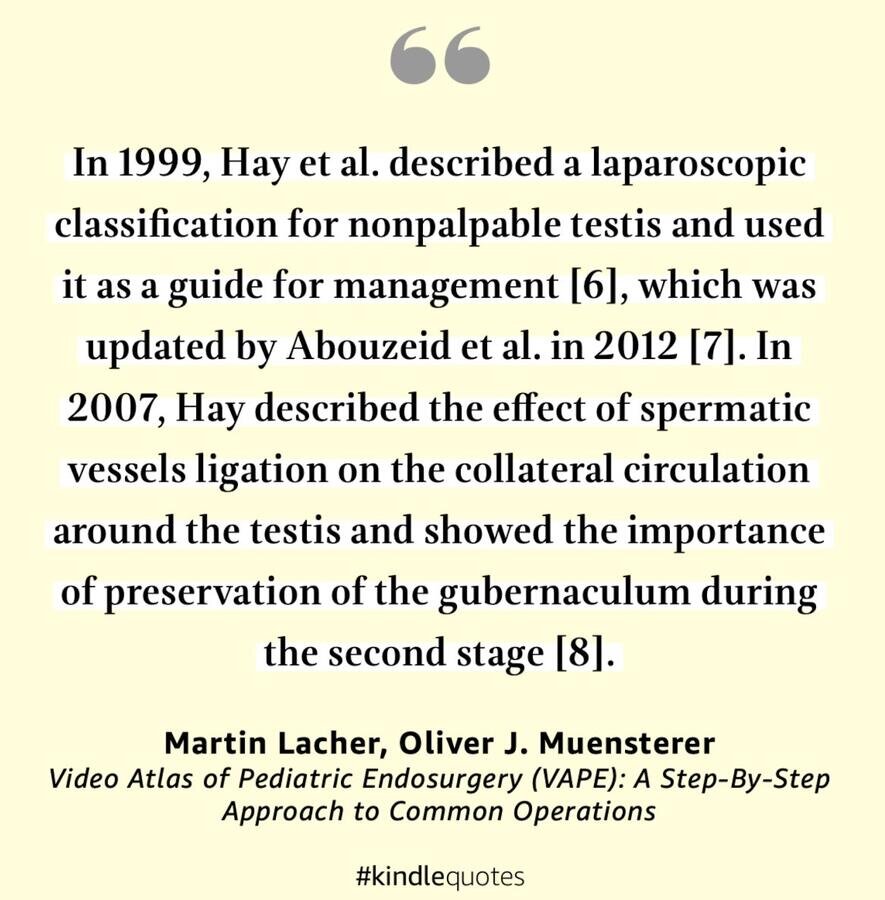
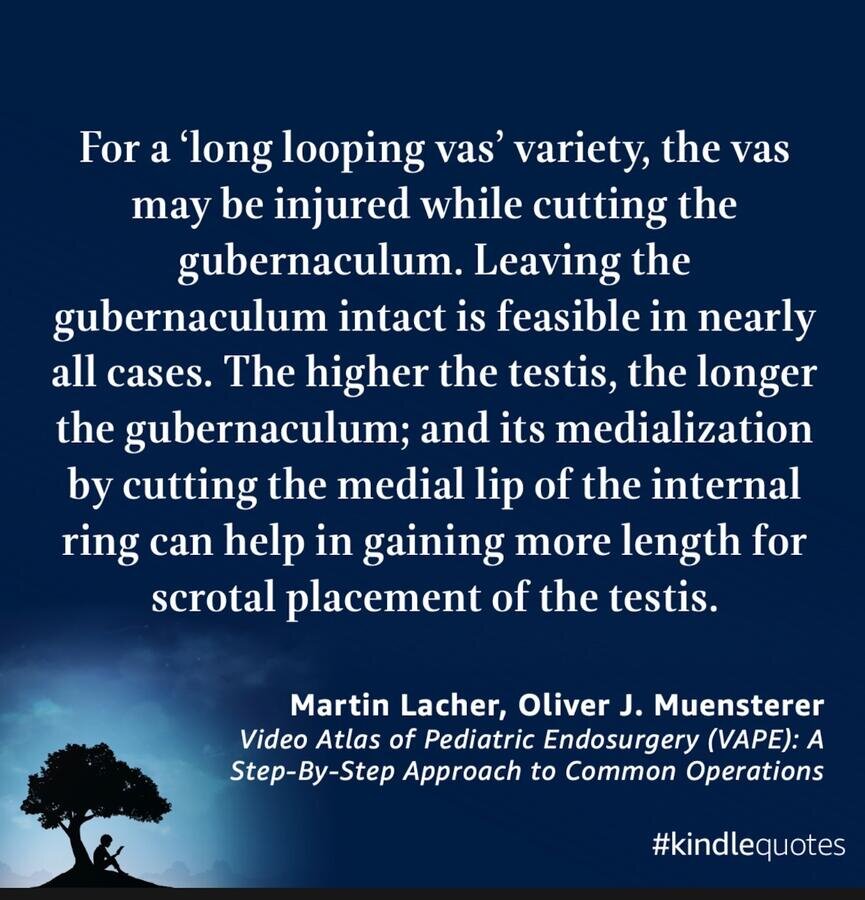
Fowler-Stephen Orchidopexy evolution
- Traction technique for undescended testice, shehata technique full explanation
- Hormonal investigations in bilateral non palpable testis
Quote from "The SAGES Manual of Pediatric Minimally Invasive Surgery" by Danielle S. Walsh, Todd A. Ponsky, Nicholas E. Bruns - "In cases where there is bilateral non-palpable UDT, a human chorionic gonadotropin (HCG) simulation test is helpful to determine if there is any functioning testicular tissue [1]. On occasion, full descent will be noted after HCG, allowing the clinician to arrive at the diagnosis of retractile testes. While the testicles will recede as the hormonal stimulation dissipates, the condition will correct itself at puberty."- Preop assessment in non palpable UDT, difference between unilateral and bilateral
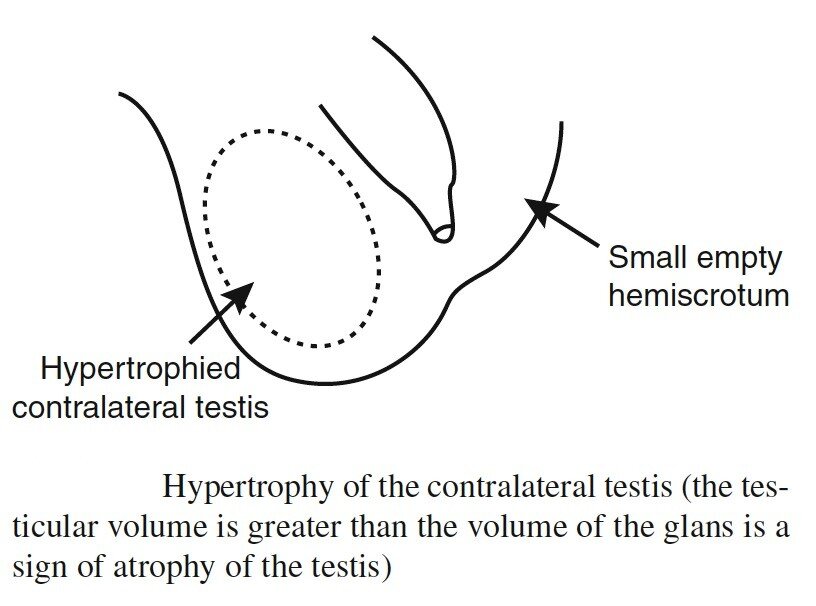
Quote from "ESPES Manual of Pediatric Minimally Invasive Surgery" by Ciro Esposito, François Becmeur, Henri Steyaert, Philipp Szavay - "For preoperative evaluation and diagnosis of unilateral NPT, physical examination is all needed, and no laboratory investigation is necessary. In unilateral NPT, compensatory hypertrophy of the contralateral testis may suggest testicular absence or atrophy. Monorchidism was observed in 95% of patients with a contralateral testis 2 cc or larger in the series of Belman and Rushton [3], but this sign is not specific and does not preclude surgical exploration. In cases of bilateral NPT or unilateral NPT accompanied by anomalies of genital region such as severe hypospadias or scrotal hyperpigmentation, disorders of sex development (DSD) should be considered in differential diagnosis, and further genetic and endocrinological evaluations are needed [4]."- US value in UDT diagnosis
Quotes from "ESPES Manual of Pediatric Minimally Invasive Surgery" by Ciro Esposito, François Becmeur, Henri Steyaert, Philipp Szavay - "Preoperative radiological evaluation was not recommended in the guidelines on NPT [4, 5]." "USG is an easy to perform noninvasive tool with no risk of anesthesia and radiation; but it has low efficacy at diagnosis to detect the presence of the testis or the absence of an intra-abdominal testis and is dependent on who performs. However, USG may be helpful in obese children, in cases of suspected DSD, to identify Mullerian structures and for determination of the exact size of pathologic and contralateral testes [6]."- during lap exploration for intra abdominal UDT
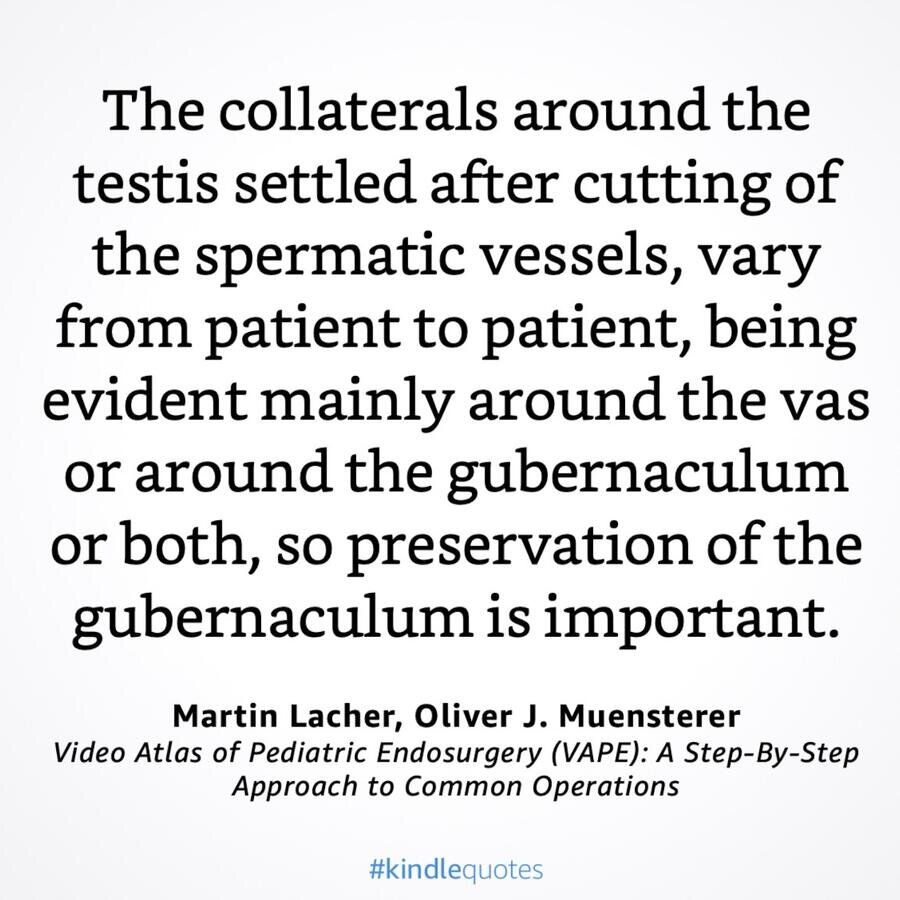
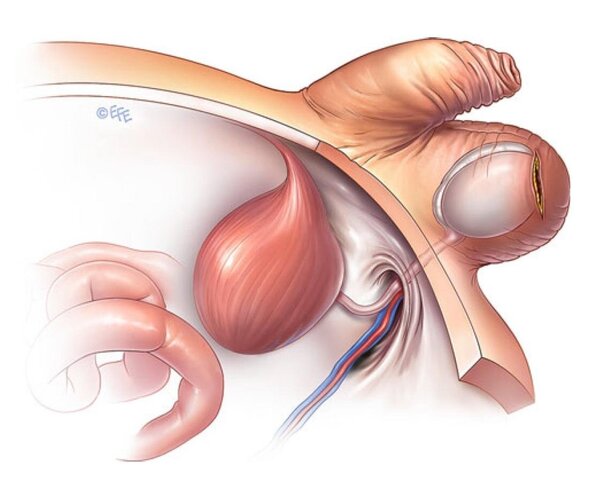
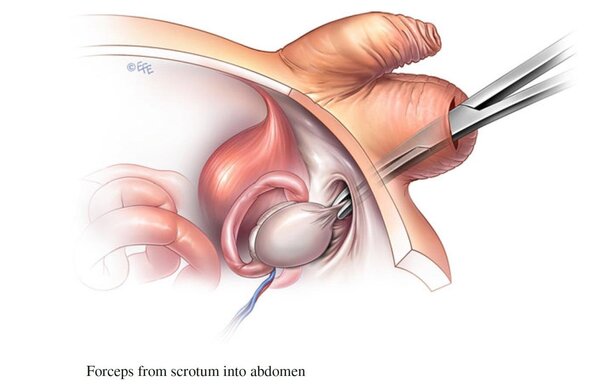
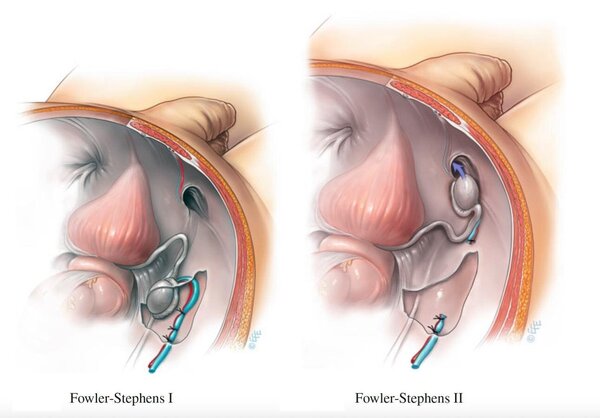
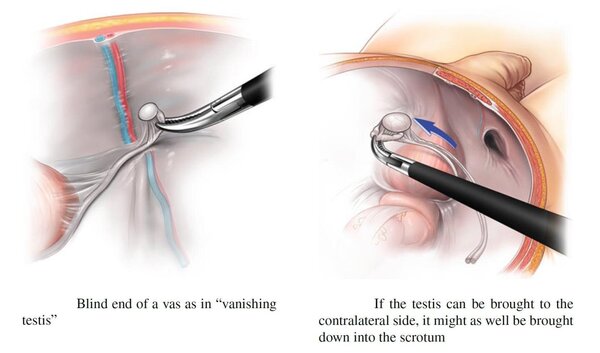
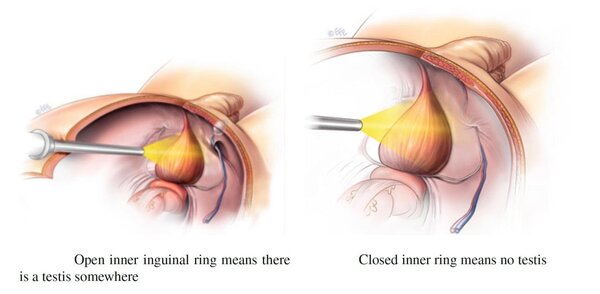
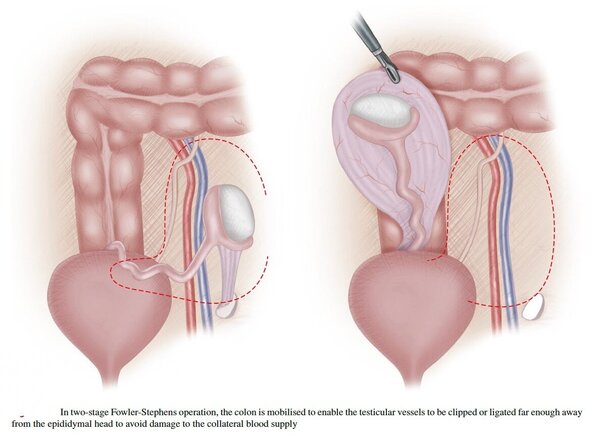
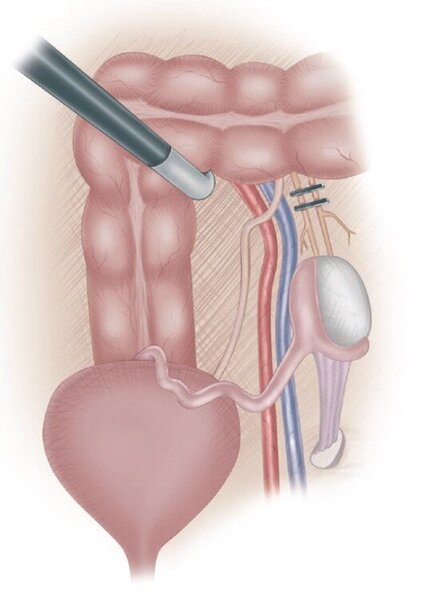
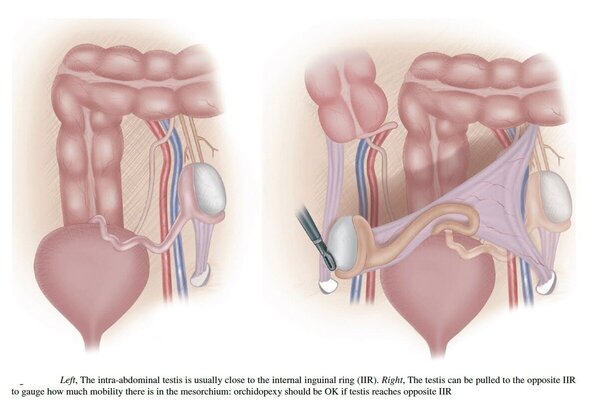
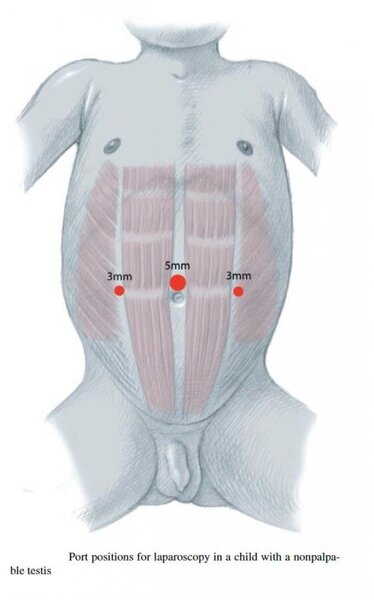
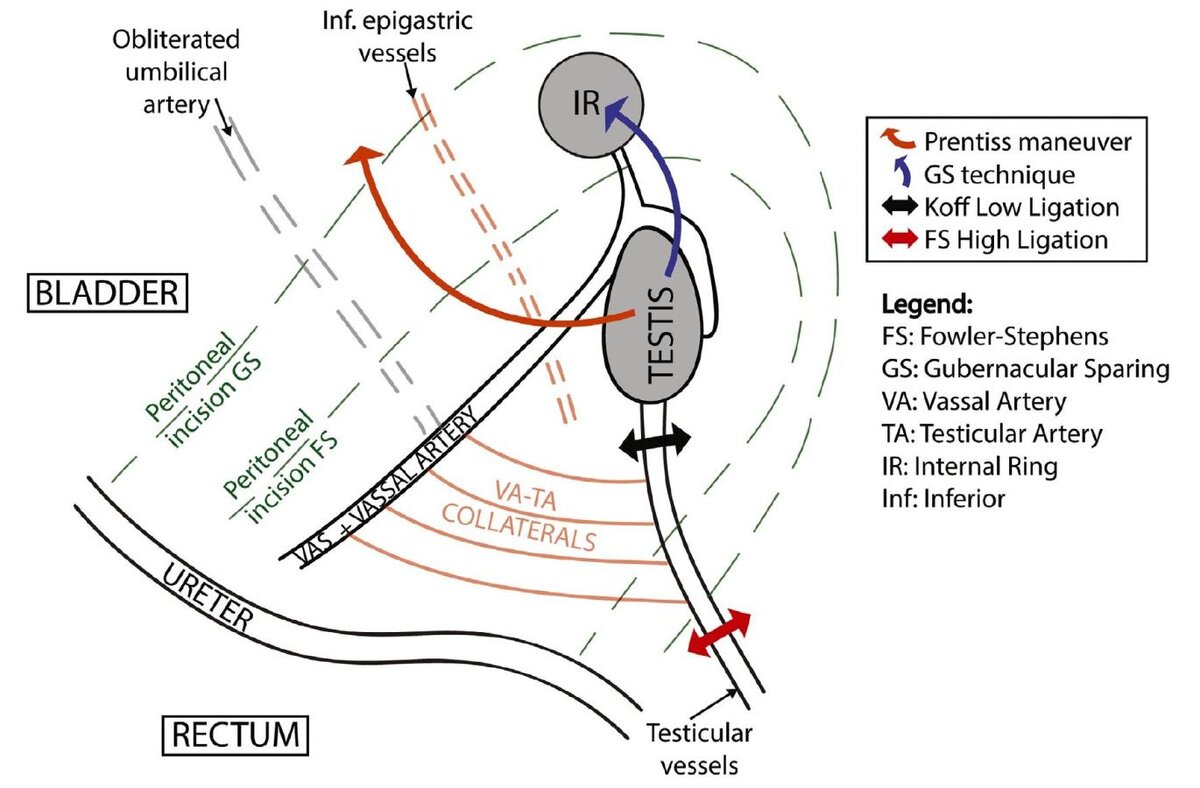
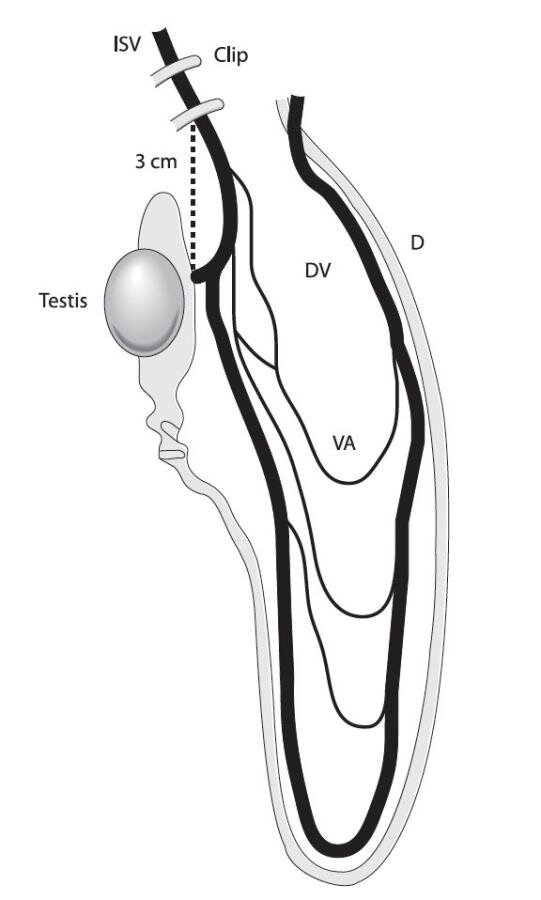
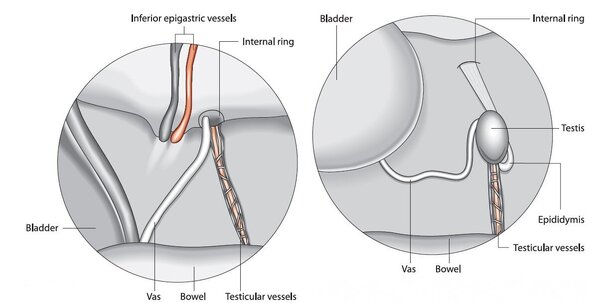
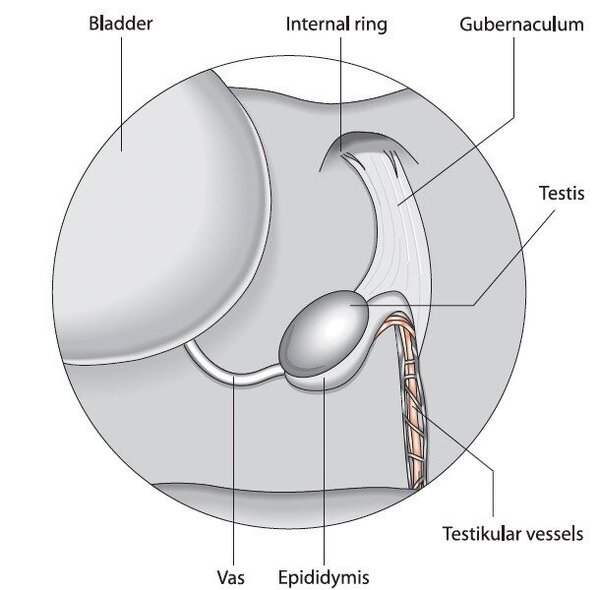
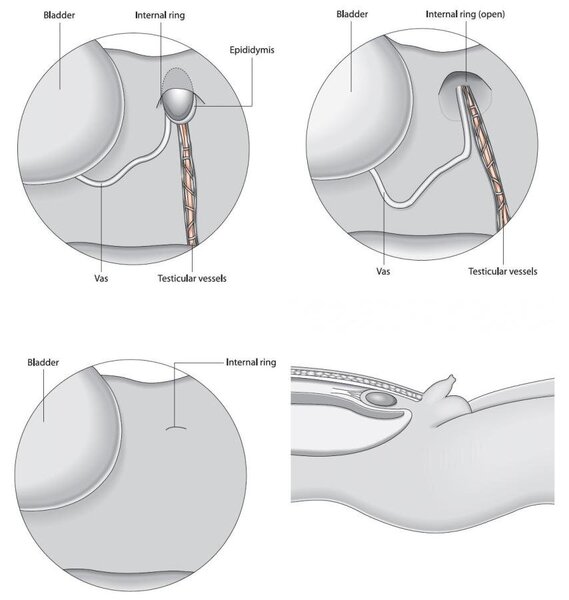
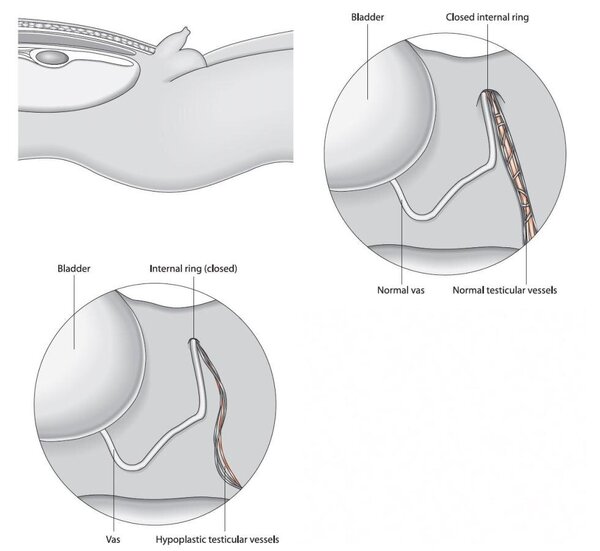
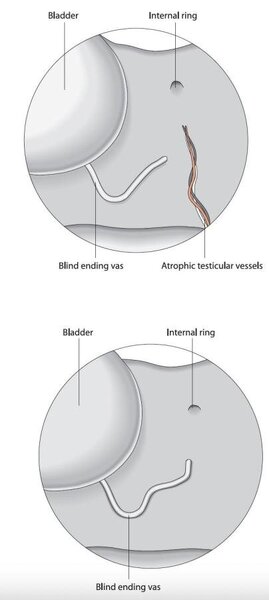
Quote from "The SAGES Manual of Pediatric Minimally Invasive Surgery" by Danielle S. Walsh, Todd A. Ponsky, Nicholas E. Bruns - "If a one-stage procedure is chosen, carefully place cephalad traction on the testis to confirm that the epididymis and vas deferens do not loop into the inguinal canal, so that these are not injured during the following step. Identify and transect the gubernaculum testis to allow complete mobilization." Quote from "The SAGES Manual of Pediatric Minimally Invasive Surgery" by Danielle S. Walsh, Todd A. Ponsky, Nicholas E. Bruns - "If the testicle is so high that a Fowler-Stephens procedure seems inevitable, high division of the testicular pedicle before any peritoneal dissection with return to do the orchiopexy in a few months often allows the collaterals the best chance to develop via the artery of the vas and the cremasters." Quote from "The SAGES Manual of Pediatric Minimally Invasive Surgery" by Danielle S. Walsh, Todd A. Ponsky, Nicholas E. Bruns - "If the vas deferens ends blindly, with no testicle at its end, the gonad must still be sought by identifying the distal end of the testicular artery, usually very high in the abdomen. This gonad can be simply resected to remove the risk of malignant degeneration in a testicle which will have no spermatogenic function." Quotes from "The SAGES Manual of Pediatric Minimally Invasive Surgery" by Danielle S. Walsh, Todd A. Ponsky, Nicholas E. Bruns - "it is imperative to make an early decision on the likelihood of a successful one-stage procedure based on the intra-abdominal location of the testicle at laparoscopy." Pediatric surgeons need to determine if treatment should be performed with one- or two-stage Fowler-Stephens orchiopexy at the initial laparoscopic inspection. Quote from "ESPES Manual of Pediatric Minimally Invasive Surgery" by Ciro Esposito, François Becmeur, Henri Steyaert, Philipp Szavay - "Testis, spermatic vessels, and vas deferens may not be found in laparoscopic exploration of the inguinal region. Intrapelvic or retrocolic testis might be present in such cases. If the bladder is full, first it is emptied, and if necessary Trendelenburg angle is increased to expose an intrapelvic testis hidden behind the bladder. If the testis is not found in rectovesical pouch, the retroperitoneum from the internal inguinal ring up to the lower pole of the kidney should be examined because the testis might be found anywhere along that tract." Quote from "ESPES Manual of Pediatric Minimally Invasive Surgery" by Ciro Esposito, François Becmeur, Henri Steyaert, Philipp Szavay - "Failure of testicular development also called as testicular agenesis can occur in early or late developmental phase (Fig. 74.3). Early-onset testicular agenesis results in the absence of the testis, spermatic vessels, and Wolffian structures. In later failure, testosterone is produced locally and induces development of Wolffian structures, so that the vas is observed in a late-onset testicular agenesis."- acute scrotum algorithm
- Testicular torsion mind map
- Torsion Testis: Surgical Emergency in children lecture
- Testicular torsion can mimic appendicitis!
- Regarding surgical treatment of testicular torsion
- surgical approach in neonatal (extra vaginal) vs non neonatal (intra vaginal) torsion
- EFAD2C18-6D0A-4777-841D-5307EDCF8454.png
- E159C4D5-6992-4773-8C78-AB5282270C42.jpg
- DD2A01A3-CF63-4E16-AF10-406E31A65900.png
- 163172E9-B77A-4AEB-B96B-F041D9F739FB.jpg
- 54854D40-09F8-4DD6-AB94-93D609E4588B.jpg
- 44016D1A-1367-4B98-B0EC-C5C6238F7240.png
- 12851D24-A5F2-4AD4-A3AE-9068F8E45932.jpg
- 9584E394-563D-4163-82A6-7BA00FA16D88.jpg
- Traction technique for undescended testice, shehata technique full explanation
Account
Navigation
Search
Configure browser push notifications
Chrome (Android)
- Tap the lock icon next to the address bar.
- Tap Permissions → Notifications.
- Adjust your preference.
Chrome (Desktop)
- Click the padlock icon in the address bar.
- Select Site settings.
- Find Notifications and adjust your preference.
Safari (iOS 16.4+)
- Ensure the site is installed via Add to Home Screen.
- Open Settings App → Notifications.
- Find your app name and adjust your preference.
Safari (macOS)
- Go to Safari → Preferences.
- Click the Websites tab.
- Select Notifications in the sidebar.
- Find this website and adjust your preference.
Edge (Android)
- Tap the lock icon next to the address bar.
- Tap Permissions.
- Find Notifications and adjust your preference.
Edge (Desktop)
- Click the padlock icon in the address bar.
- Click Permissions for this site.
- Find Notifications and adjust your preference.
Firefox (Android)
- Go to Settings → Site permissions.
- Tap Notifications.
- Find this site in the list and adjust your preference.
Firefox (Desktop)
- Open Firefox Settings.
- Search for Notifications.
- Find this site in the list and adjust your preference.