


admin
Administrators
-
Joined
-
Last visited
Everything posted by admin
-
quote from "Pediatric Surgery (Springer Surgery Atlas)" by Prem Puri, Michael E. Höllwarth - "Consensus is building that the crucial step in postnatal germ cell maturation is transformation of neonatal gonocytes into type A spermatogonia in the second 6 months after birth; hence the current recommendation for orchidopexy is at 6 months of age. Prevention of germ-cell loss is the aim of surgery, although this effect remains unproven."
-
quote from "Pediatric Surgery (Springer Surgery Atlas)" by Prem Puri, Michael E. Höllwarth - "Circumcision of the visible external prepuce in these cases does not achieve emergence of the penis and may compromise the eventual reconstruction of a more normal circumcised appearance. An operation for this condition, to release the tethered corpora and remodel the shaft skin,"
-
quote from "Pediatric Surgery (Springer Surgery Atlas)" by Prem Puri, Michael E. Höllwarth - "The buried penis is an abnormality of peno-scrotal fusion, in which the penile corpora are also tethered to the deep fascia of the lower abdominal wall. It is associated with phimosis, and the appearance of the external skin suggests that the penis is small or even absent. Often the inner preputial space is enlarged and balloons during voiding, with dribbling from the preputial orifice—referred to as megaprepuce."
-
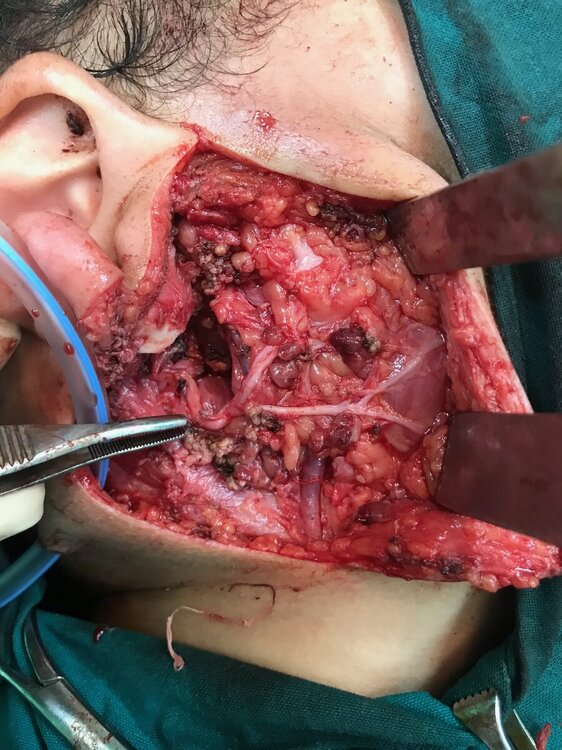
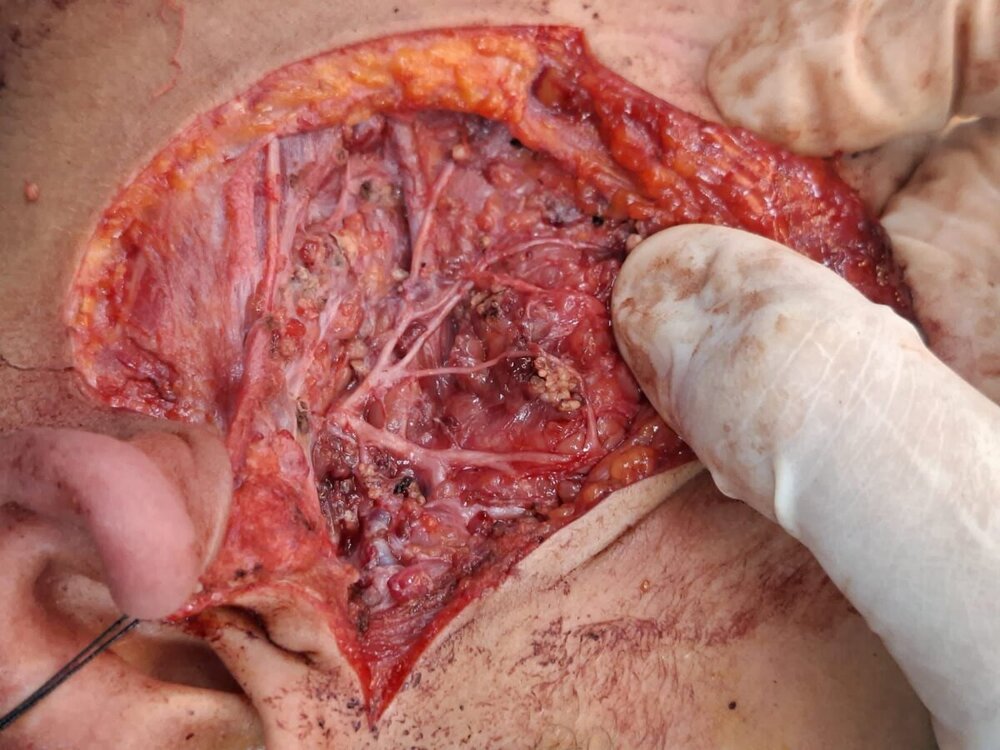
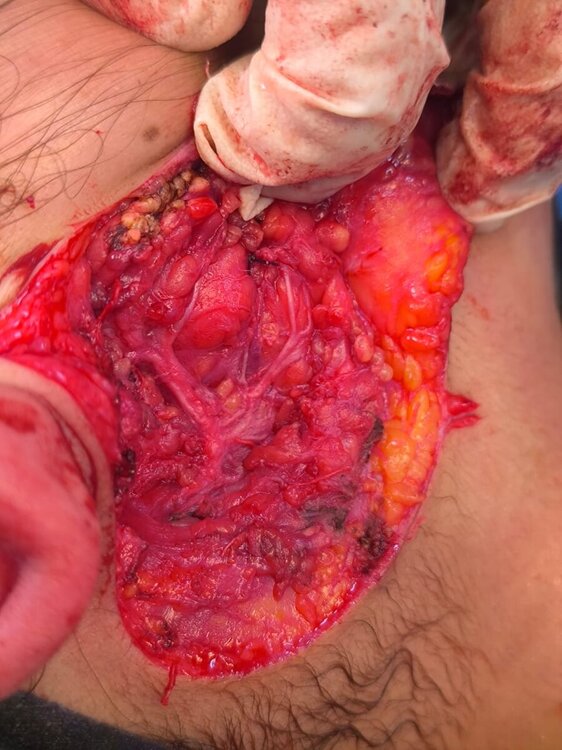
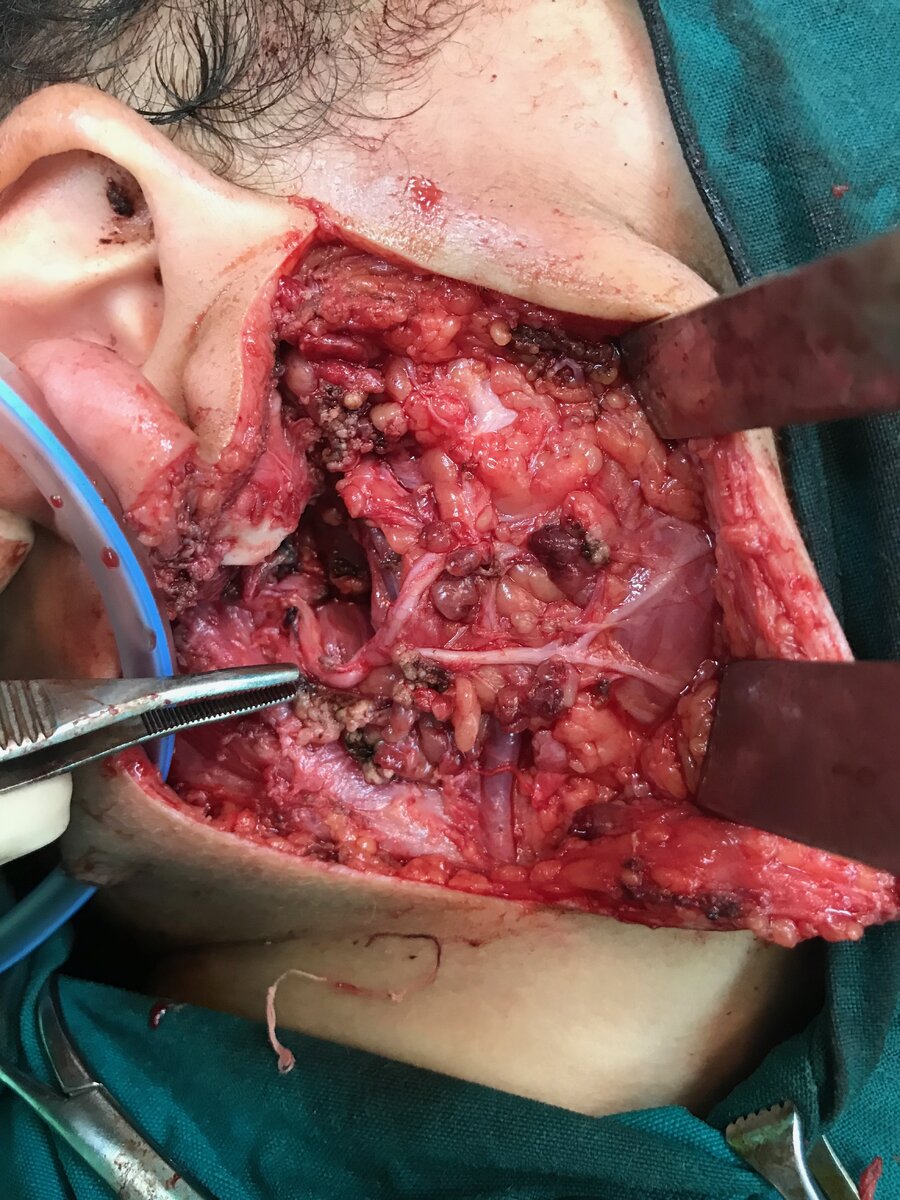
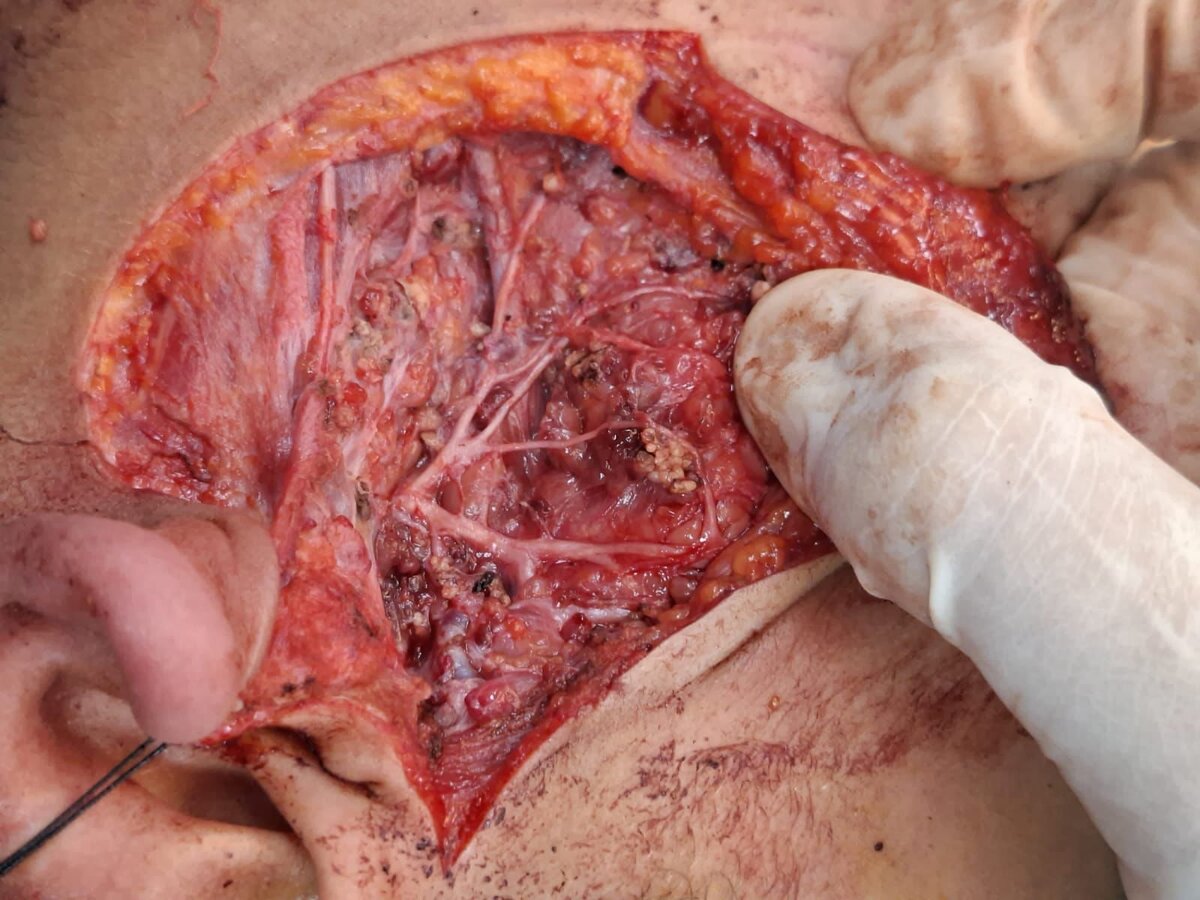
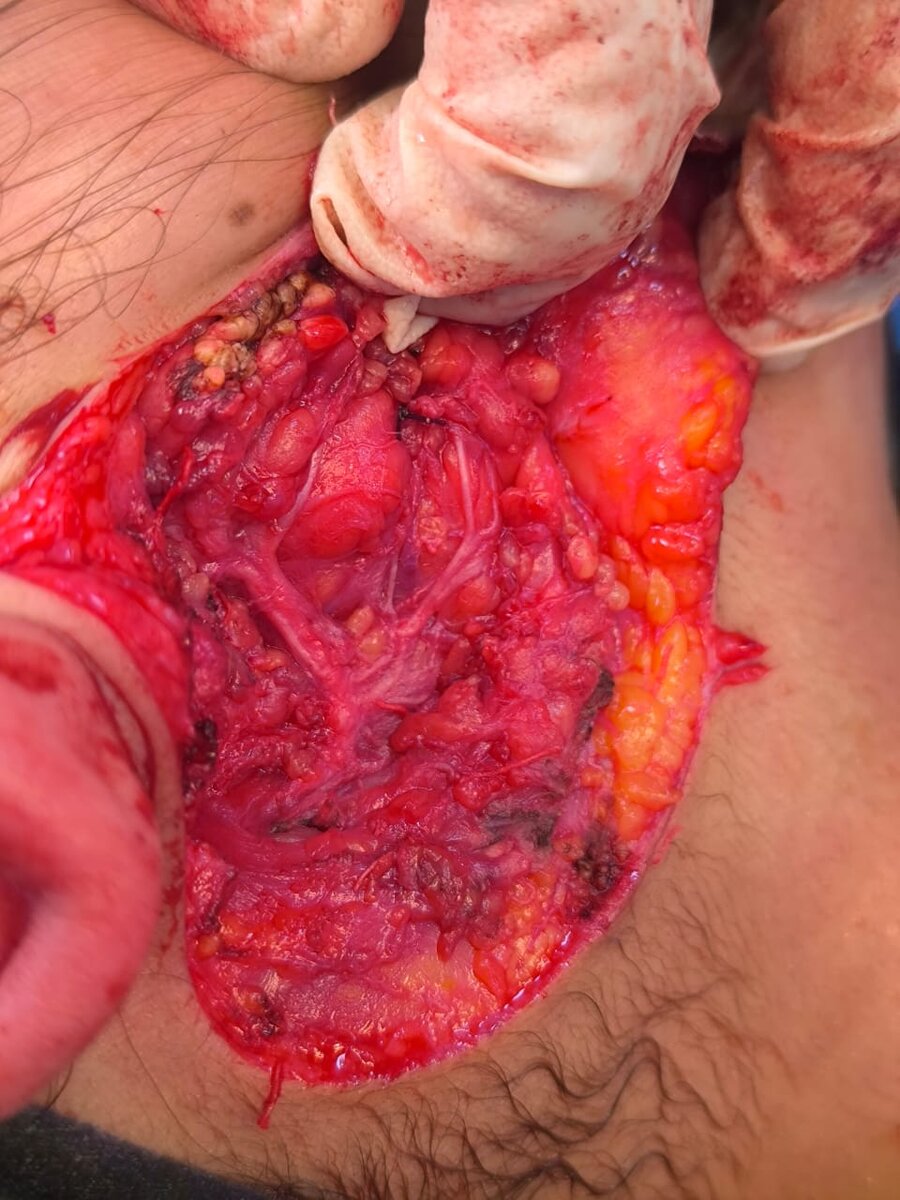
Collection of superficial parotidectomy operative photos from colleagues at Pediatric surgery unit, Menofia university hospitals, Egypt
-
 Anorectal Malformation (ARM): When To Operate? Lecture
 -
quote from "Pediatric Surgery (Springer Surgery Atlas)" by Prem Puri, Michael E. Höllwarth - "The late sequelae of ureteroneocystostomy continue to be studied. A disadvantage of the transtrigonal technique is that subsequent endoscopic ureteral manipulation is difficult if an upper tract ureteral calculus occurs, whereas the ureteral orifice is in normal position with the detrusorrhaphy and Politano-Leadbetter techniques"quote from "Pediatric Surgery (Springer Surgery Atlas)" by Prem Puri, Michael E. Höllwarth - "The success rates of the P-L and the Cohen (transtrigonal) techniques are similar. The advantage of the P-L is that the ureter is much easier to catheterize for retrograde pyelography and ureteral endoscopy because the ureteral opening of the Cohen is on the opposite side of the bladder. The disadvantage is that in creating the new ureteral hiatus, there is a blind spot behind the bladder, and a peritoneotomy or even bowel injury may occur, particularly in reoperative cases."quote from "Pediatric Surgery (Springer Surgery Atlas)" by Prem Puri, Michael E. Höllwarth - "Medical management is based on the principles that VUR often diminishes or resolves over time, and maintaining sterile urine minimizes the risk of reflux nephropathy. Medical management includes bladder training (encouraging regular micturition and treating symptoms of bladder/bowel dysfunction) and possibly antibiotic prophylaxis with a daily dose of an antimicrobial such as nitrofurantoin, trimethoprim, or sulfatrim. Many children undergo regular follow-up assessment with a voiding cystourethrogram (VCUG) and renal ultrasonogram (US) every 12–18 months. Medical management is continued until the VUR resolves or improves sufficiently that the VUR no longer seems clinically significant. Many clinicians consider grades I and II VUR to be benign.quote from "Pediatric Surgery (Springer Surgery Atlas)" by Prem Puri, Michael E. Höllwarth - "In those patients who had prenatal diagnosis of hydronephrosis, ultrasonography is performed in the first week of life. If hydronephrosis is confirmed, radionuclide studies are undertaken when the child is 6–8 weeks old in order to assess renal function and rule out obstruction. In those patients who present with clinical symptoms, a renal ultrasound is performed, and if it shows hydronephrosis without dilated ureters, the diagnosis is confirmed with radionuclide studies. The most commonly used radionuclides are diethylenetriamine pentaacetate (DTPA) and mercaptoacetyltriglycine (MAG3). Because MAG3 is excreted mostly by the renal tubules and yields better images in infants with compromised renal function and immature kidneys, we and others prefer to use traces with a high extraction rate (such as MAG3) in patients with hydronephrosis."
until
Join the upcoming ESPU educational committee webinar on Tuesday24/2 “IN MEMORIAM: PAUL MITROFANOFF A LEGACY FROM THE CATHETERISABLE CHANNEL TO ROBOTIC INNOVATION” The webinar will feature Prof. Alaa El Ghoneimi and Prof. Mohan Gundeti and will be starting at 7 pm GMT, 9 pm Cairo time Register through the link: https://us02web.zoom.us/meeting/register/rGsB6W3ESmqeBISeBWZZWA?fbclid=IwY2xjawP6bNpleHRuA2FlbQIxMQBicmlkETAxMk0zR200b2s3cHdxblBUc3J0YwZhcHBfaWQBMAABHhhvobCSFFszCrWmn-1EsSwevF4v6ejD_j5KuyKWZXsaILOiq75b960rChdy_aem_1KYgvaz71YBv-ol5ayeT1A#/registrationquote from "Pediatric Surgery (Springer Surgery Atlas)" by Prem Puri, Michael E. Höllwarth - "The generally recommended pressures for insufflation are 15 mm Hg in adolescents (>10 years), 10–12 mm Hg in children (2–10 years), and 8–10 mm Hg in infants (0–2 years); these levels produce minimal physiologic effects. Children typically have a smaller and more compliant anterior abdominal wall than adults, limiting the working space during insufflation. Their peritoneal cavity does not accommodate more than 1–2 L of pneumoperitoneum, compared with 3–5 L in adults. Because of the higher compliance of their anterior abdominal wall, increasing the IAP above these recommended levels does not increase the working space."quotes from "Pediatric Colorectal Conundrums: Case Studies: From Fundamental to Advanced (Pediatric Colorectal Surgery)" by Marc Levitt, Thomas Xu, Hussein Wissanji - "In addition, females with an ARM should have a gynecologic exam. This is often performed initially with a physical exam to confirm the presence of a vaginal opening. If the vaginal opening is absent, a pelvic US can be performed to assess intra-abdominal gynecologic structures and guide planning of reconstruction." "At the time of anorectoplasty, a vaginoscopy can be performed to identify the presence of a vaginal septum and characterize the number and location of the cervix or cervices. If the vagina is absent on exam, a diagnostic laparoscopy can be performed to determine if Müllerian structures (upper vagina, cervix, uterus, and Fallopian tubes) or the ovaries are present. This information is valuable for counseling the family and can influence possible gynecologic reconstruction options either at the time of the initial repair or in the future, at the time of thelarche or later in life."until
On Wednesday 11/2, European Society for Paediatric Gastroenterology, Hepatology and Nutrition (ESPGHAN) Webinar - Beyond Parenteral Nutrition: The Role of Teduglutide in Intestinal Rehabilitation. This webinar is part of the Young ESPGHAN Webinar Series. Starting at 4 pm GMT , 6 pm Cairo time Register through the link; https://zoom.us/webinar/register/WN_f_BeV9HSQQag5TXDmuUF9w#/registrationuntil
On Thursday 19/2, ERNICA research collaboration webinar on “Respiratory Burden in Esophageal Atresia: What We Miss - And How We Can Do Better'' Starting at 3 pm GMT , 5 pm Cairo time Register through the link; https://events.teams.microsoft.com/event/27199a1a-0cfc-44a7-b99f-77fd7572eac2@526638ba-6af3-4b0f-a532-a1a511f4ac80until
On Wednesday 25/2, Surgery - Radiology - Pathology Rounds with The Montreal Children's Hospital sponsored by The Henderen Project. Starting at 5 pm GMT , 7 pm Cairo time Register through the link: https://www.hendrenproject.org/content/surgery-radiology-pathology-rounds-montreal-childrens-hospitaluntil
On Thursday 23/4, The monthly international colorectal web meeting by Colorado children’s hospital sponsored by The Henderen Project Starting at 4 pm GMT , 6 pm Cairo time Register through the link; https://www.hendrenproject.org/case/about-international-colorectal-web-meetingsquote from "Pediatric Surgery (Springer Surgery Atlas)" by Prem Puri, Michael E. Höllwarth - "The survival of children with testis tumours depends on the histology of the tumour and the presence or absence of metastatic disease. Children with teratomas, epidermoid cysts, and benign stromal tumours do well with excision alone. No long-term follow-up is required. Patients with yolk sac tumour require a metastatic evaluation consisting of a CT scan of the abdomen and pelvis, a chest x-ray or chest CT scan, and determination of the serum AFP level. The half-life of AFP is 5 days. Approximately 80% of patients will have stage 1 disease (disease limited to the testicle) confirmed by a negative radiographic evaluation and normalization of the AFP level. These patients may be observed closely without adjuvant therapy. Historically, follow-up has included CT scans every 2 months and chest x-rays and AFP levels monthly for 2 years, followed by observation at longer intervals. However, consideration should be given to decreasing the frequency of CT scanning by relying more on AFP levels and MRI, to minimize the long-term risks of radiation exposure from multiple CT scans. The relapse rate for stage 1 yolk sac tumour patients is approximately 20% but virtually all patients can be salvaged with chemotherapy. Patients who present with metastatic disease are treated with adjuvant chemotherapy, and survival is nearly 100% for this group as well. Radiation plays no role in the primary treatment of these tumours. Metastatic stromal tumours, though exceedingly rare, are resistant to treatment. Survival is low for this group."quote from "Pediatric Surgery (Springer Surgery Atlas)" by Prem Puri, Michael E. Höllwarth - "Retroperitoneal lymph node dissection (RPLND) plays a very limited role in prepubertal testis tumours. Unlike adults, only a minority of prepubertal patients with metastases have metastases limited to the retroperitoneum, and metastatic disease is very responsive to chemotherapy. Furthermore, the complication rate following RPLND is significantly higher in children than in adults. The only relative indications for retroperitoneal surgery in a prepubertal patient are to biopsy an equivocal node or to excise a persistent retroperitoneal mass following chemotherapy—a rare occurrence."quote from "Pediatric Surgery (Springer Surgery Atlas)" by Prem Puri, Michael E. Höllwarth - "If, based on the AFP level, a tumour is felt to be malignant, then an inguinal orchiectomy is performed. Tumours that are likely to be benign based on AFP level should be managed initially with an excisional biopsy and frozen section analysis. Even tumors that appear on ultrasound to replace the testis may be enucleated, leaving significant residual testicular tissue. If a benign histology is confirmed, then the testis is closed with absorbable suture and returned to the scrotum. If the biopsy reveals a malignant tumour (usually yolk sac) or potentially malignant tumour (such as an undifferentiated stromal tumour or a Sertoli cell tumour in an older child), then an inguinal orchiectomy should be performed. If a teratoma is diagnosed and the child is near pubertal age, the surrounding parenchyma should be examined for its pubertal status. If the tubules are immature, then the tumour may be treated as benign, but if the tubules show evidence of maturation, the tumour should be treated as potentially malignant because some adult teratomas behave in a malignant fashion."






Account
Navigation
Search
Configure browser push notifications
Chrome (Android)
- Tap the lock icon next to the address bar.
- Tap Permissions → Notifications.
- Adjust your preference.
Chrome (Desktop)
- Click the padlock icon in the address bar.
- Select Site settings.
- Find Notifications and adjust your preference.
Safari (iOS 16.4+)
- Ensure the site is installed via Add to Home Screen.
- Open Settings App → Notifications.
- Find your app name and adjust your preference.
Safari (macOS)
- Go to Safari → Preferences.
- Click the Websites tab.
- Select Notifications in the sidebar.
- Find this website and adjust your preference.
Edge (Android)
- Tap the lock icon next to the address bar.
- Tap Permissions.
- Find Notifications and adjust your preference.
Edge (Desktop)
- Click the padlock icon in the address bar.
- Click Permissions for this site.
- Find Notifications and adjust your preference.
Firefox (Android)
- Go to Settings → Site permissions.
- Tap Notifications.
- Find this site in the list and adjust your preference.
Firefox (Desktop)
- Open Firefox Settings.
- Search for Notifications.
- Find this site in the list and adjust your preference.