


admin
Administrators
-
Joined
-
Last visited
Everything posted by admin
-
-
-
until
On Thursday 18/12, European Society for Paediatric Gastroenterology, Hepatology and Nutrition (ESPGHAN) Webinar - AI in Medicine: An Introduction and Practical Guide for Clinicians Starting at 4 pm GMT , 6 pm Cairo time Register through the link; https://zoom.us/webinar/register/WN_xjU_VavDTR2rHHp3kQikWw#/registration -
until
On Thursday 18/12, The monthly international colorectal web meeting by Colorado children’s hospital sponsored by The Henderen Project Starting at 2 pm GMT , 4 pm Cairo time Register through the link; https://www.hendrenproject.org/case/about-international-colorectal-web-meetings -
until
On Wednesday 17/12, International pediatric live surgery online group holding the bimonthly course. This course topic is on “BiliarySurgery”. Starting at 7,30 am GMT , 9,30 am Cairo time Register through the link; https://us02web.zoom.us/meeting/register/NApmS800RfGqkqH7QlTI8Q#/registration -
until
On Friday 12/12, ESPES/WOFAPS Online meeting on “MIS Thymectomy and Mediastinal masses”. Presented by John Meehan, Shilpa Sharma, Fabio Chiarenza. Starting at 1 pm GMT, 3 pm Cairo time Link for the event: https://zoom.us/j/98419786472pwd=ivpwCE7Ak0C4rRjdH28g1|zlAzSZaq.1 Meeting ID: 984 1978 6472 Passcode: 362305 -
until
On Friday 5/12, Cure4u collaborative with the European Reference Network (ERN) are conducting their monthly colorectal cases discussions. This month features a special joint session with Tanta University Hospital, Egypt. Starting at 11,30 am GMT, 1,30 pm Cairo time Register through the link: https://us02web.zoom.us/j/88332138315?pwd=pqMpQOVM5cmSaCoONHsB9LPZhRGKLB.1 Meeting ID: 883 3213 8315 Passcode: 915487 -
On Thursday 4/12, The Association of Pediatric Surgeons ofPakistan (APSP) is holding a joint conference with Nationwide Children’s Hospital, USA on Pediatric Colorectal surgery & Bowel Management as part ofthe 33rd International conference of APSP. The event will be broadcasted online and registration details will be available soon
-
until
On Tuesday 2/12, European association of urology (EAU) webinar on EAU Guidelines updates on neurogenic bladder, undescended testes,and prepubertal testicular tumors. Presented by Prof. G. Bogaert (BE), Ass. Prof. N. Pakkasjarvi (FI), Prof. Dr. C. Radmayr (AT), Drs. A. Van Uitert (NL) Starting at 5,30 pm GMT, 6,30 pm Cairo time Register through the link: https://webinars.uroweb.org/EAU/webinars/1996 -
until
On Wednesday 3/12, The Alliance of Pediatric Surgeons Growing And Advancing Representation (APGAR) is holding Pediatric Colorectal Surgery Panel. Presented by Scott Short, Jason Frischer, Devin Halleran andRebecca Rentea. Starting at 12:30 am GMT, 2,30 am Cairo time 7:30pEST. Below are details for the zoom event: Link for the event: https://pitt.zoom.us/j/95652929651 Meeting ID: 956 5292 9651 -
quote from "Pediatric Surgery (Springer Surgery Atlas)" by Prem Puri, Michael E. Höllwarth - "Fusiform choledochal cyst is usually associated with complicated PBMU as well as debris and/or protein plugs in the common channel. Pancreatic duct anomalies are also often present. IE should be performed up to the distal common bile duct in fusiform cases to confirm that dissection can be performed safely."
-
quote from "Pediatric Surgery (Springer Surgery Atlas)" by Prem Puri, Michael E. Höllwarth - "In cystic choledochal cyst, the distal common hepatic duct is narrow—sometimes so narrow that it looks blind-ended and cannot be identified specifically. Thus, if mucosectomy is completed up to the pancreatico-biliary junction, it is unlikely that a residual cyst will develop within the pancreas (Fig. 42.5). In contrast, in fusiform choledochal cyst, excision of the distal common hepatic duct is more difficult because the distal common bile duct is still wide at the pancreatico-biliary junction; if it is not excised properly, the likelihood that the distal common bile duct will be left within the pancreas is high."
-
quote from "Pediatric Surgery (Springer Surgery Atlas)" by Prem Puri, Michael E. Höllwarth - "Surgical problems with cystic choledochal cyst are most often encountered on the proximal side of the pathology, occurring as a result of anatomic variants of the common hepatic duct, uncertainty in relation to the excision level of the common hepatic duct, dilated IHBD, and debris and/or stenosis in the IHBD. In contrast, surgical problems with fusiform choledochal cyst most often arise on the distal side of the malformation and are due to uncertainty in relation to the excision level of the distal choledochus, debris in the common channel, and complicated PBMU." Quote from "Pediatric Surgery (Springer Surgery Atlas)" by Prem Puri, Michael E. Höllwarth - "In comparison with fusiform choledochal cysts, there are usually more adhesions between a cystic choledochal cyst and surrounding vital structures such as the portal vein and hepatic artery, especially in older children. In adolescents and adults, the adhesions are often very dense, and great care is required during cyst excision."
-
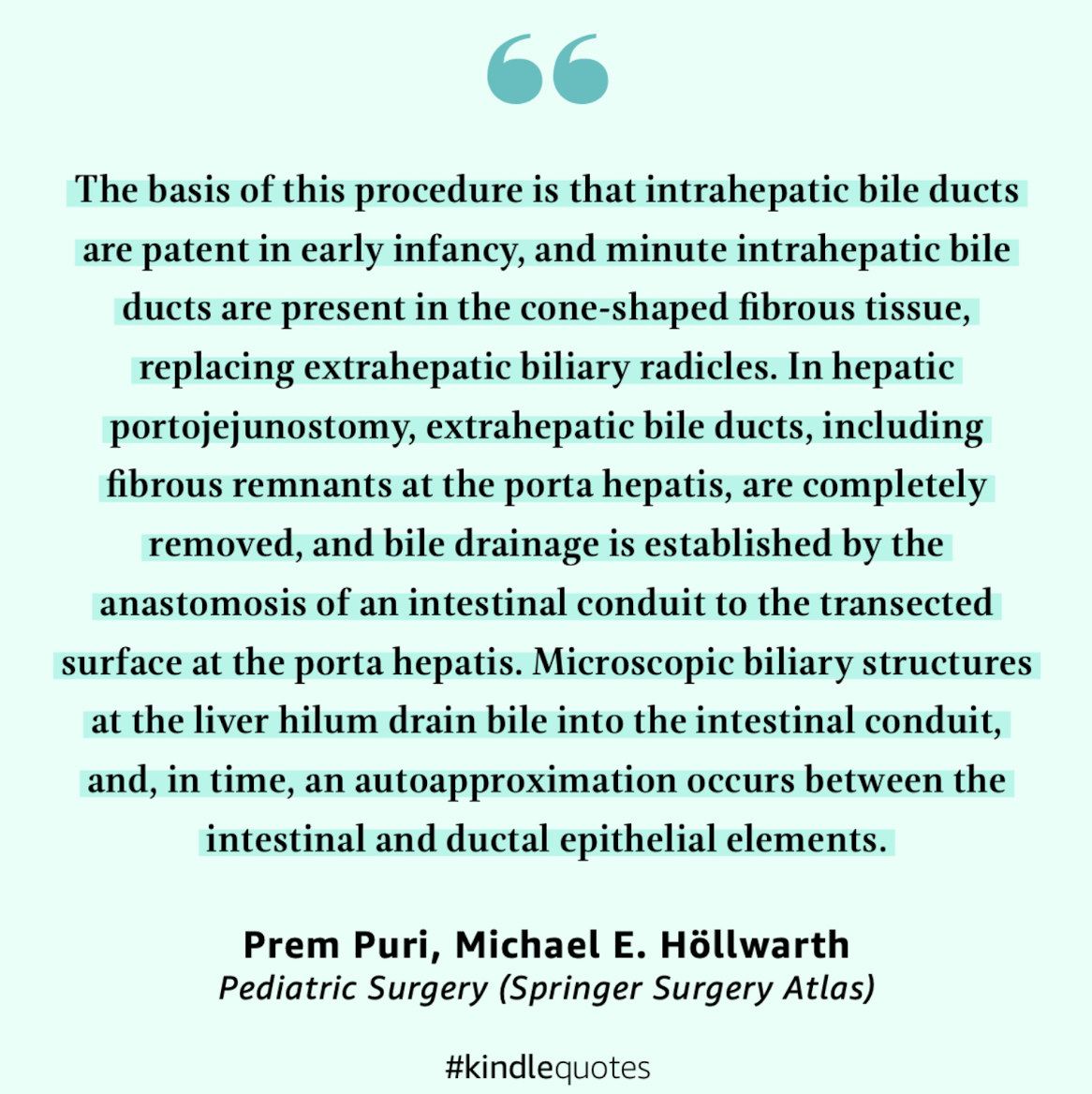
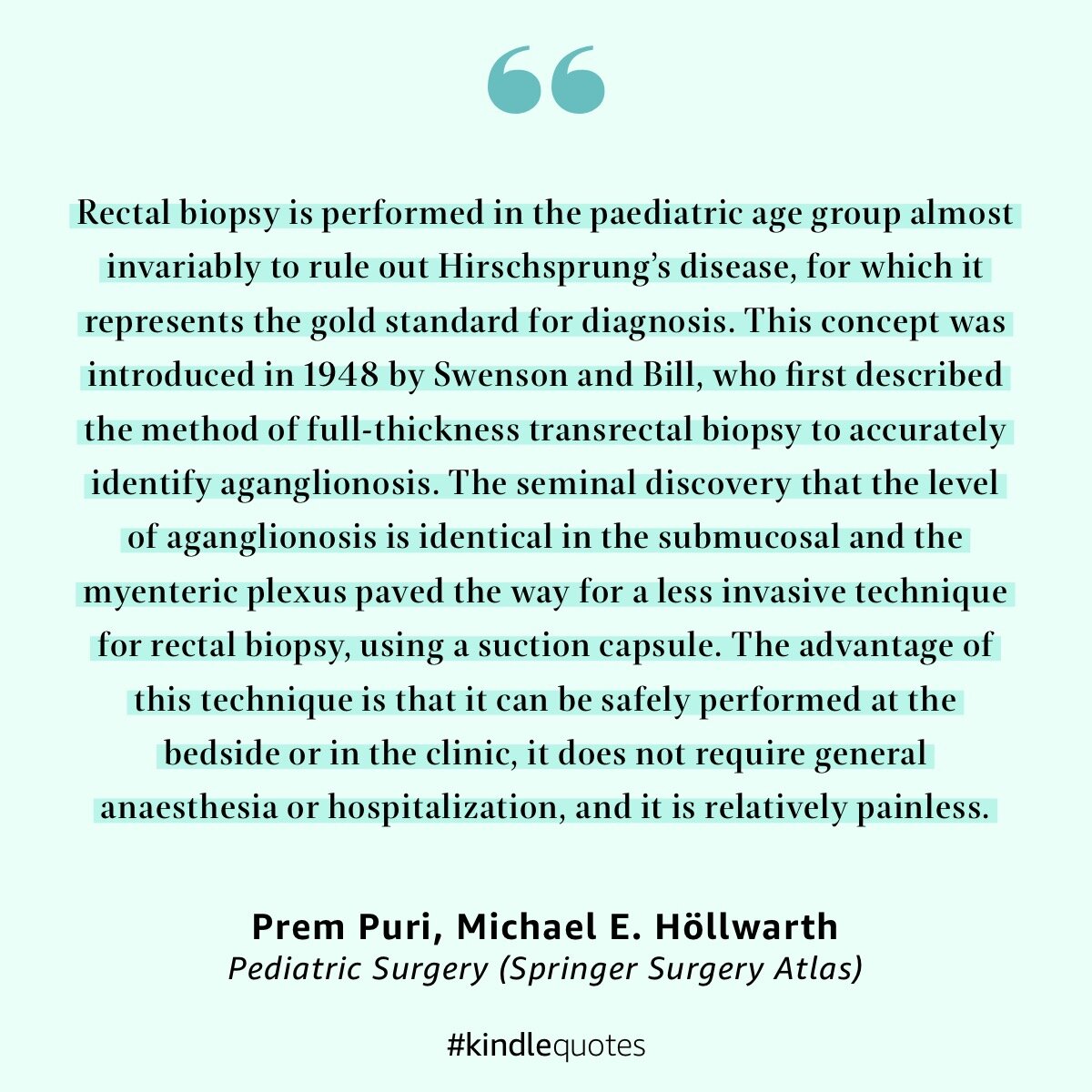
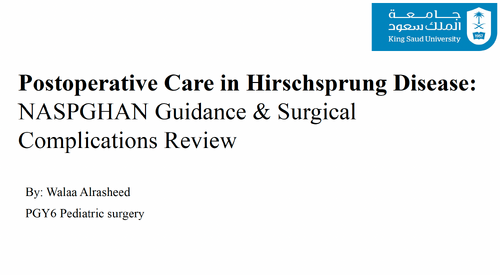 Postoperative Care in Hirschsprung Disease: NASPGHAN Guidance & Surgical Complications Review
 -


.png.2eb052ad8e2cfc0bbedf92f26d69a923.png)
.jpeg.9d9a34909b658b8388ef640e368aa875.jpeg)
.jpeg.051b7a5bcc4cebc9573b6248c2aca460.jpeg)
Account
Navigation
Search
Configure browser push notifications
Chrome (Android)
- Tap the lock icon next to the address bar.
- Tap Permissions → Notifications.
- Adjust your preference.
Chrome (Desktop)
- Click the padlock icon in the address bar.
- Select Site settings.
- Find Notifications and adjust your preference.
Safari (iOS 16.4+)
- Ensure the site is installed via Add to Home Screen.
- Open Settings App → Notifications.
- Find your app name and adjust your preference.
Safari (macOS)
- Go to Safari → Preferences.
- Click the Websites tab.
- Select Notifications in the sidebar.
- Find this website and adjust your preference.
Edge (Android)
- Tap the lock icon next to the address bar.
- Tap Permissions.
- Find Notifications and adjust your preference.
Edge (Desktop)
- Click the padlock icon in the address bar.
- Click Permissions for this site.
- Find Notifications and adjust your preference.
Firefox (Android)
- Go to Settings → Site permissions.
- Tap Notifications.
- Find this site in the list and adjust your preference.
Firefox (Desktop)
- Open Firefox Settings.
- Search for Notifications.
- Find this site in the list and adjust your preference.